
Last updated November 22, 2026
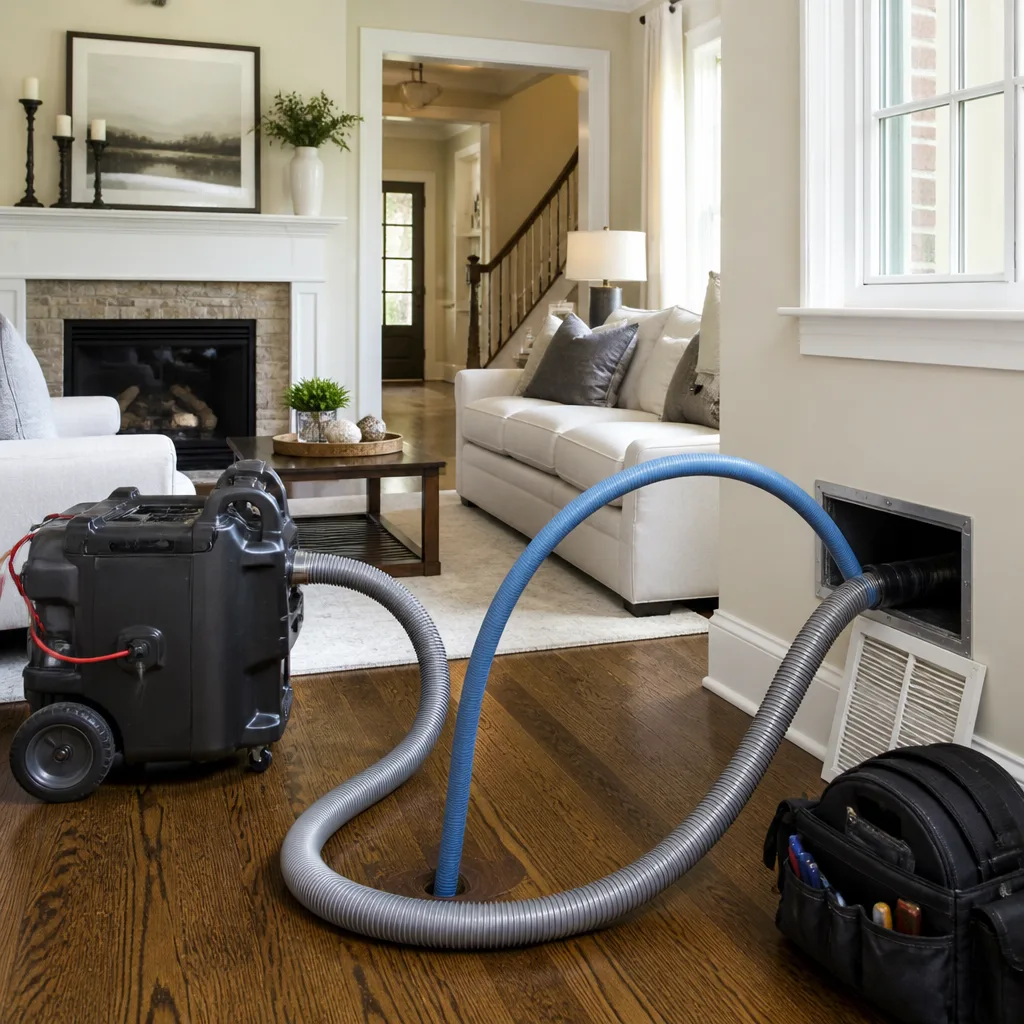 Whole-home duct cleaning
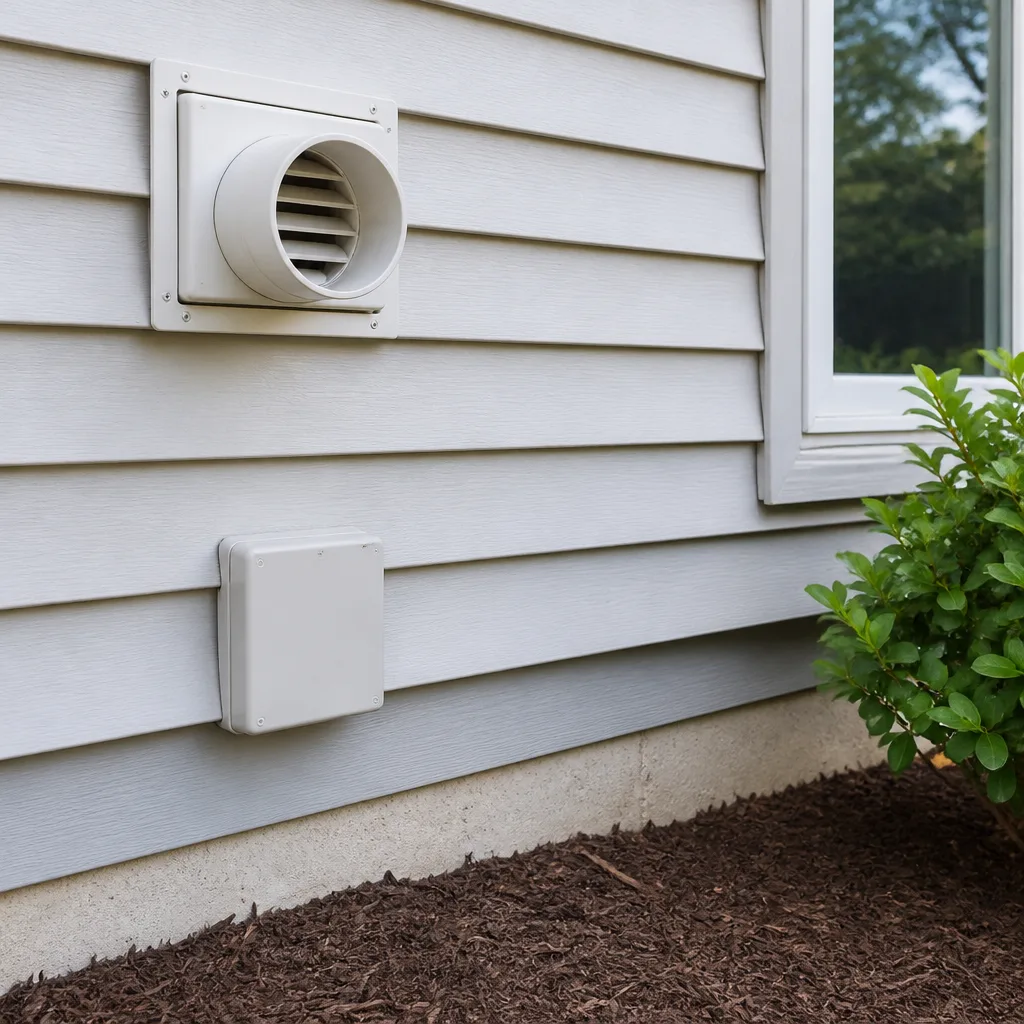 Dryer vent cleaning
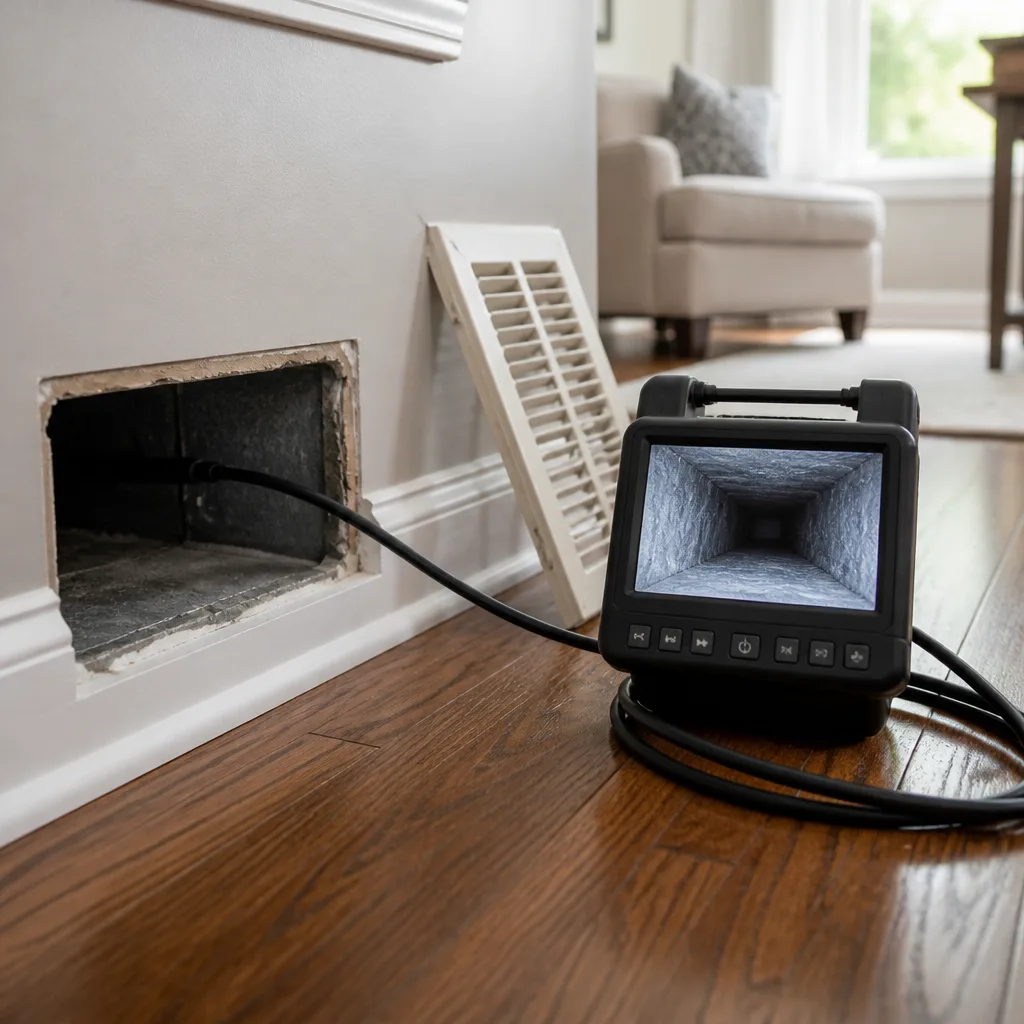 Camera inspection
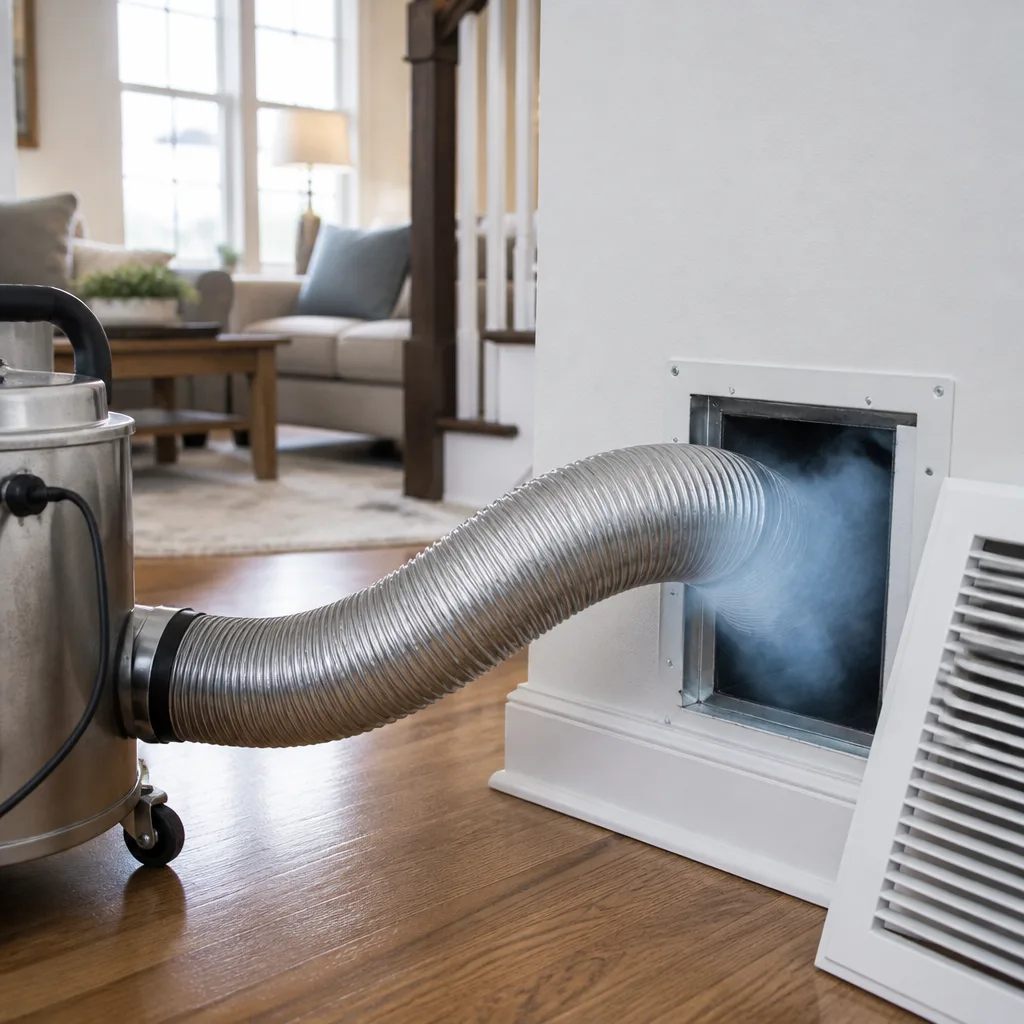 Sanitizing & deodorizing
Whole-system duct and dryer vent check with before-and-after photos - you see exactly what came out of your vents
That "$99 whole-house special" is a bait ad - the real number appears once they are in your hallway, or the "clean" is a shop-vac at the register. We photograph the inside of your ducts before and after instead.
Air Duct Cleaning Emergency Preparedness Guide for Long Island City Homes
Running your HVAC after a flooding event or a fire in an adjacent unit is one of the fastest ways to spread contamination through every room in your home. That surprises people. Most homeowners assume the system helps clear the air. In practice, a running air handler pulls smoke, soot, flood-borne moisture, or construction dust straight into the ductwork and pushes it into spaces the initial damage never reached. The contamination gets distributed before anyone thinks to shut the system down. This guide covers how to assess duct infiltration, when to stop and document, what emergency versus standard cleaning actually looks like, and how clearance testing works. It’s written for Long Island City homes where dense development, waterfront flood exposure, and older buildings meet.
Quick Answer
If your Long Island City home has experienced a flood, fire, or heavy construction dust event, shut off the HVAC system before running it again, photograph the visible intrusion points, and schedule a professional duct inspection before resuming normal operation. Emergency duct cleaning after a compromising event involves negative-pressure containment, HEPA filtration, and mechanical agitation with professional-grade equipment like Rotobrush or Nikro systems, followed by optional clearance testing with Abatement Technologies air sampling gear. A rapid-response assessment in Queens usually happens within the same day or the next dispatch window.
Styles & brands we work with
- Whole-home duct cleaning
- Dryer vent cleaning
- Camera inspection
- Sanitizing & deodorizing
Table of Contents
- Post-Flood Duct Protocol: What to Do First
- Smoke and Fire Damage: Odor vs. Soot Contamination
- Construction Dust Infiltration in Long Island City
- Emergency vs. Standard Cleaning: What’s Different
- What Equipment Should Actually Be on the Truck
- Clearance Testing with Abatement Technologies Equipment
- Documentation That Supports an Insurance Claim
- Building a Duct Emergency Preparedness Plan
Post-Flood Duct Protocol: What to Do First
Floodwater that reaches a supply register or return grill is a duct contamination event, even if the visible water recedes quickly. Long Island City’s waterfront blocks sit in flood-exposed zones, and basement-level mechanical rooms and duct chases near grade are particularly vulnerable during heavy rain and storm surge. What matters in the first 48 hours is stopping the system from doing more damage.
Follow this order:
- Shut off the HVAC system at the thermostat and the breaker. Do not run the fan in “on” mode to “dry things out.” That circulates moisture and any biological growth into every branch line.
- Photograph everything before cleanup. Registers, return grills, the air handler cabinet, and any visible waterline inside ductwork. Timestamped photos are your baseline for insurance and for the cleaning contractor.
- Remove standing water from the mechanical area and run dehumidification in the room, not through the ducts.
- Do not attempt to clean duct interiors yourself. Consumer shop vacs and brush kits push debris deeper and offer no containment.
- Schedule a professional inspection to determine whether water actually infiltrated the duct system or stayed outside it.
Not every flood means duct replacement, but any duct that held standing water or wet insulation needs professional evaluation. In our experience, the homes that fare best after a Long Island City flood event are the ones where the HVAC system was shut down early and documented thoroughly before any cleanup began.
Why Running the System First Is the Mistake
An air handler moves several hundred to over a thousand cubic feet per minute. If ductwork is holding water, silt, or biological growth, that airflow atomizes contamination and distributes it across every room served. The result is a much larger remediation scope than the flood alone created. That’s the documented indoor air quality risk most homeowners never hear about until after the fact.
Smoke and Fire Damage: Odor vs. Soot Contamination
Smoke smell and soot contamination are two different problems, and they require different responses. Odor contamination comes from volatile organic compounds that cling to duct surfaces and insulation after a fire in your unit, a neighboring unit, or a shared mechanical shaft. Soot contamination is physical particulate – fine carbon residue that settles on duct walls, coils, and blower assemblies. A fire in an adjacent Long Island City apartment can push smoke through shared return chases and into units that never saw flame.
Here’s how the two compare:
- Odor contamination: detectable smell, little visible residue. Addressed with source cleaning plus air sanitizing and antimicrobial treatment, often paired with carbon filtration to adsorb residual VOCs.
- Soot contamination: visible dark residue on registers, inside duct walls, on the evaporator coil and blower. Addressed with mechanical agitation (Rotobrush rotary brush) plus HEPA vacuum extraction under negative pressure.
- Mixed contamination: the most common post-fire scenario. Requires cleaning first, then sanitizing, then verification.
For Long Island City homes near the dense mid-rise and high-rise corridors, shared ventilation is the wildcard. If your building shares a return path or a rooftop unit with an adjacent space, a fire two units away can still load your ducts with smoke residue. That’s why we treat odor complaints after a building fire as a legitimate duct inspection trigger, not something to mask with air fresheners.
What Equipment Addresses Soot
Soot is fine, electrically conductive, and easily re-entrained. It requires HEPA-level containment and negative-pressure cleaning. Consumer vacuums and ordinary shop vacs lack HEPA filtration and will exhaust soot back into the room. Professional Nikro HEPA units with multi-stage filtration are the industry standard for this work. When the scope includes sanitizing, we use recognized air-quality product lines including Aprilaire and Guardsman components for the treatment step.
Construction Dust Infiltration in Long Island City
Long Island City has one of the most active development corridors in Queens. Demolition, excavation, and high-rise construction generate fine silica and gypsum dust that finds its way into residential ductwork through open returns, unsealed penetrations, and negative-pressure air exchange between adjacent buildings. This is a slow infiltration event rather than a sudden one, which is exactly why it goes unnoticed until someone in the household starts reacting to the air.
Signs your system has taken on construction dust:
- Visible grey or white residue on return grills and duct-facing surfaces
- A dust film that returns within days of cleaning surfaces
- Increased allergy or respiratory symptoms since nearby work began
- HVAC filter loading much faster than usual
- Uneven airflow or a musty smell in rooms closer to the construction side of the building
If you can document a timeline – when construction started, when symptoms or dust patterns began, and what the pre-construction condition looked like – that record supports both an insurance claim against your own policy and a contractor liability claim against the construction party. The single most useful thing you can do is call for a professional assessment before the construction ends and the trail cools.
Why Timing Matters for Liability
Construction dust claims live or die on evidence. Photos from before the project, photos during, a duct inspection report, and clearance documentation all strengthen the case. Once construction is complete and the site is cleaned up, the causal link is much harder to establish. If you live near active excavation in Long Island City and your ducts have loaded with dust, the inspection should happen while the work is still going on.
Emergency vs. Standard Cleaning: What’s Different
A standard air duct cleaning appointment is scheduled, methodical, and usually one to three hours of work depending on system size and contamination level. Emergency or rapid-response duct cleaning after a flood, fire, or major dust event is a different scope. It’s about stopping further contamination, containing what’s already there, and documenting the initial condition.
The practical differences:
- Priority scheduling: emergency assessments get prioritized in the dispatch queue, typically same day or the next opening.
- Scope: a rapid response is usually an inspection plus containment plus a targeted first-pass cleaning, not a full deep clean. Full cleaning follows once the event is stabilized.
- Documentation: photos, moisture readings where relevant, and a written condition report up front so nothing gets lost if an insurance claim is filed.
- Sanitizing: almost always included, because biological growth is likely after flood exposure and odor contamination needs a treatment step.
- Equipment: HEPA negative-pressure containment and mechanical agitation are both required, not optional.
What emergency cleaning is not: it’s not a five-minute vacuum pass, and it’s not a longer, more expensive version of standard cleaning just because the situation is stressful. Pricing is set per job by the written estimate regardless of urgency. In Queens, a rapid-response assessment is realistically scheduled within the same day or the next dispatch window – not within minutes. Anyone promising instant arrival on every call is overselling what the market actually delivers.
What a Reasonable Response Window Looks Like
For Long Island City, most professional duct services can schedule a post-event assessment within the same day during the week. If the event happens on a Saturday, expect to be booked for the next available opening. Anything faster than that should be treated as a scheduling claim worth verifying.
What Equipment Should Actually Be on the Truck
If you’re going to let a company into your ducts after a contamination event, the equipment matters more than the sales pitch. Professional-grade duct cleaning after any emergency should include, at minimum, mechanical agitation, HEPA vacuum extraction, and containment gear. Consumer equipment and one-hose setups can’t handle post-event contamination.
Here’s what we use and what you should expect to see on any professional service:
- Rotobrush rotary brush system: aggressive, contact-based cleaning of duct walls that dislodges soot, silt, and biological growth that air-only methods leave behind.
- Nikro HEPA vacuum with negative-pressure setup: multi-stage HEPA filtration that traps sub-micron particles and prevents re-entrainment during cleaning.
- Containment sheeting and negative-air equipment to isolate the work zone in multi-unit Long Island City buildings.
- Air sampling gear for post-cleaning verification (typically Abatement Technologies equipment).
- Sanitizing and antimicrobial treatment applied after cleaning so the biological amplification step has already been handled.
Professional-grade equipment, not consumer shortcuts, is the divider. A technician who shows up with a shop vac and a drill-mounted brush is doing surface-level work on a system that needs mechanical agitation under containment. You’ll notice the difference in the airflow, the odor, and the dust film on nearby surfaces within the first week after service. The HVAC cleaning scope also matters here, because post-emergency duct work almost always touches coils, the blower, and the air handler cabinet – not just the ducts themselves.
Clearance Testing with Abatement Technologies Equipment
Clearance testing verifies that post-event cleaning actually achieved the outcome it promised. It’s the step most duct cleaners skip, and it’s the one that carries the most weight after a flood, fire, or construction dust event. You want to know not only that the work happened, but that the ducts are measurably cleaner than they were before.
Here’s how clearance testing typically works:
- Baseline sampling before cleaning if the system is accessible and the scope is worth measuring.
- Post-cleaning air sampling inside the duct system and in the conditioned space, using calibrated air sampling equipment. Abatement Technologies sampling gear is standard for this work because it captures representative particle counts comparable over time.
- Comparison and reporting showing before and after particle counts, with photos of duct interiors.
- Written clearance report suitable for the homeowner, a landlord, an insurance carrier, or a property manager.
Why does clearance documentation matter? First for health: a verified clean system is one you can trust with a family member who has allergies or respiratory sensitivity. Second for legal: if you’re pursuing a claim against a construction party or filing under your own policy, a clearance report from a qualified duct cleaning contractor carries real evidentiary weight. It’s also what separates a professional service from a surface level one – before-and-after photos of your own ducts plus measured air quality data make the work verifiable.
Documentation That Supports an Insurance Claim
Insurance claims involving duct contamination are won or lost on the paperwork that exists before cleaning begins. Most homeowners don’t realize this until after the work is done, which is why this section sits inside an emergency preparedness guide.
Here’s the documentation set worth having:
- Timestamped photos of every register, return grill, and the air handler before any cleanup
- Moisture readings in the mechanical area and duct chases if flood-related
- A written pre-cleaning condition report describing contamination type and scope
- The construction timeline if the event was connected to nearby work
- Clearance testing report with before and after data
- Photos of the duct interiors showing the cleaned result – before-and-after of your own ducts
For Long Island City property managers specifically, having this template ready for every unit reduces the back-and-forth with a carrier by days. That’s operational, not cosmetic. The dryer vent cleaning scope is often part of the same claim package after a water event, so it’s worth evaluating both systems in the same visit.
Building a Duct Emergency Preparedness Plan
A real preparedness plan is short, written, and kept somewhere you’ll actually find it during a stressful situation. Here’s what to have ready before you ever need it.
- Note your HVAC shutoff locations: the breaker for the air handler and the thermostat setting. Write them down and stick the note inside the thermostat’s access panel.
- Photograph your duct system now, when it’s clean. A clean baseline is the single most useful record in a future claim.
- Save a professional duct cleaning contact in your phone. Looking one up in the middle of a fire alarm going off is worse than it sounds.
- Know your building’s shared ventilation layout if you’re in a multi-unit Long Island City building. It changes how far a fire or smoke event can reach.
- Keep a small dehumidifier and box fans that can be deployed in the mechanical area, not through the ducts.
- Understand what your insurance policy covers for duct contamination, if anything. That conversation happens better before the event than after.
An Air Duct Cleaning Long Island City inspection before and after any major event gives you a documented baseline and an end-state to compare against. It’s a light lift compared to the cost of chasing a claim without records.
Common Mistakes to Avoid
- Running the HVAC immediately after a flood or fire. This is the single biggest amplification step. Shut the system off before anything else.
- Trusting a shop vac as “emergency cleaning.” Consumer vacuums don’t contain soot or biological contamination and push as much back into the room as they capture.
- Skipping the documentation step. Photos before cleanup take five minutes and save months of claim friction. In Long Island City construction dust cases specifically, missing documentation is the main reason valid claims fail.
- Treating odor with air fresheners instead of source cleaning. Odor from VOCs in the duct system doesn’t go away with masking agents; it needs sanitizing and carbon filtration.
- Choosing a duct cleaner based on price alone after an event. Emergency response requires HEPA containment and mechanical agitation. Cutting corners on equipment means paying twice for the same job.
- Ignoring the shared ventilation risk in multi-unit buildings. A fire two units away can still contaminate your ducts if returns are shared. That’s a Long Island City building reality worth knowing.
- Not re-checking dryer vents after a water event. Moisture and debris collect in dryer vent runs, and a dryer vent fire risk after a flood is a real thing. Get dryer vent cleaning on the schedule as part of the post-event checklist.
See the difference
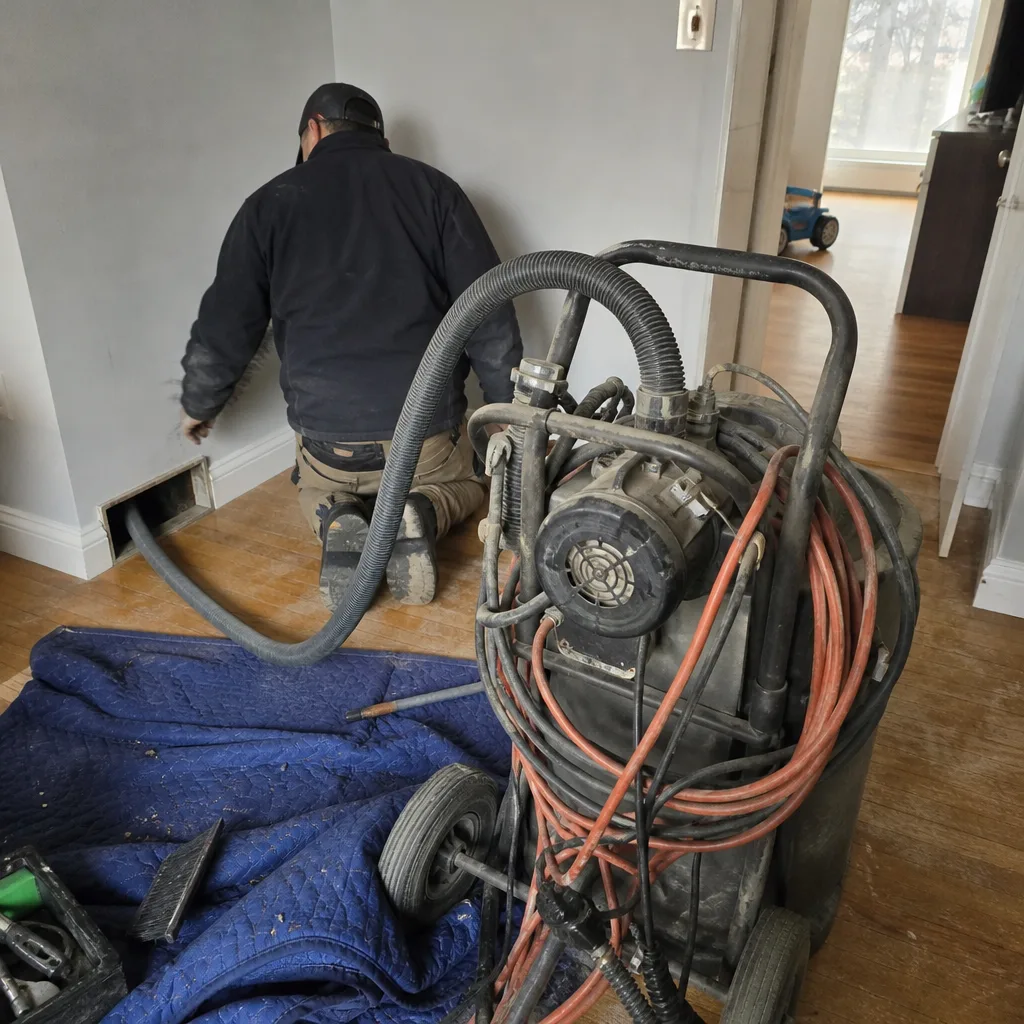 Before
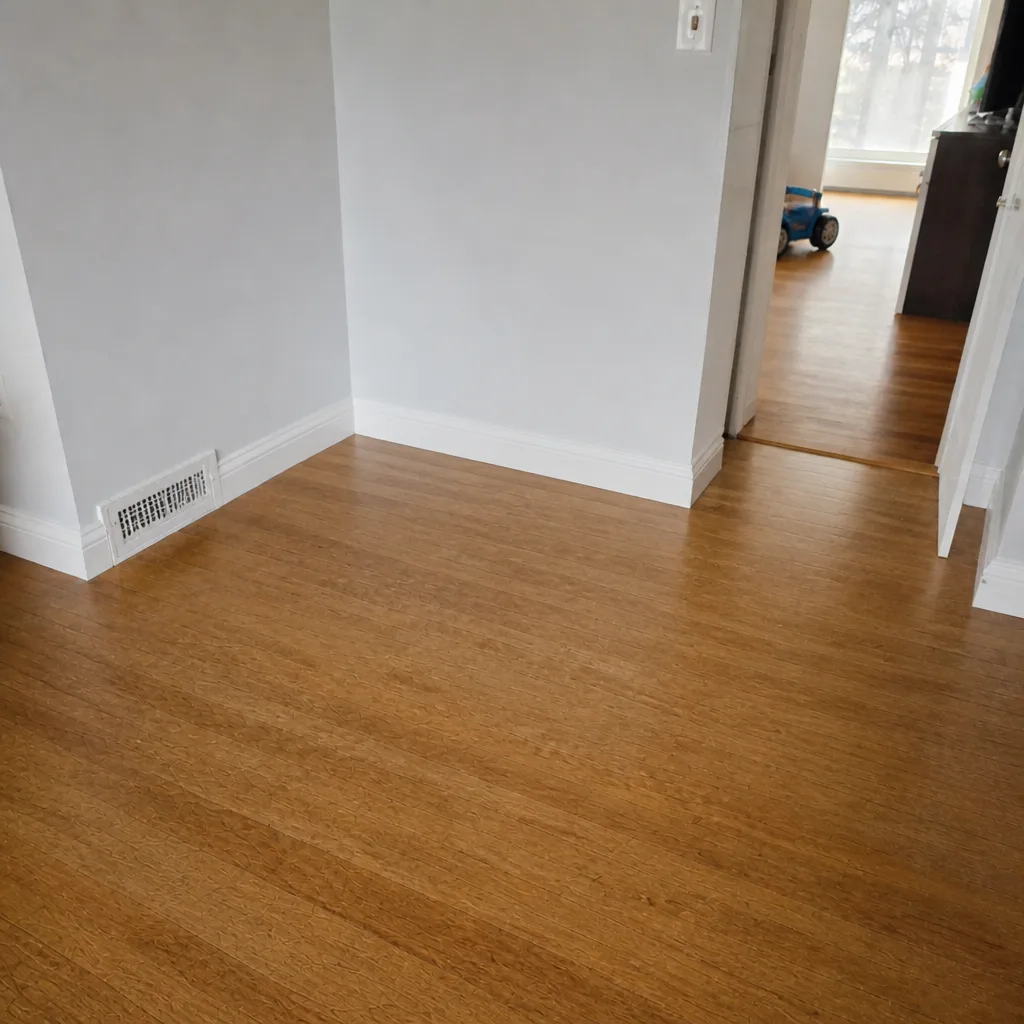 After
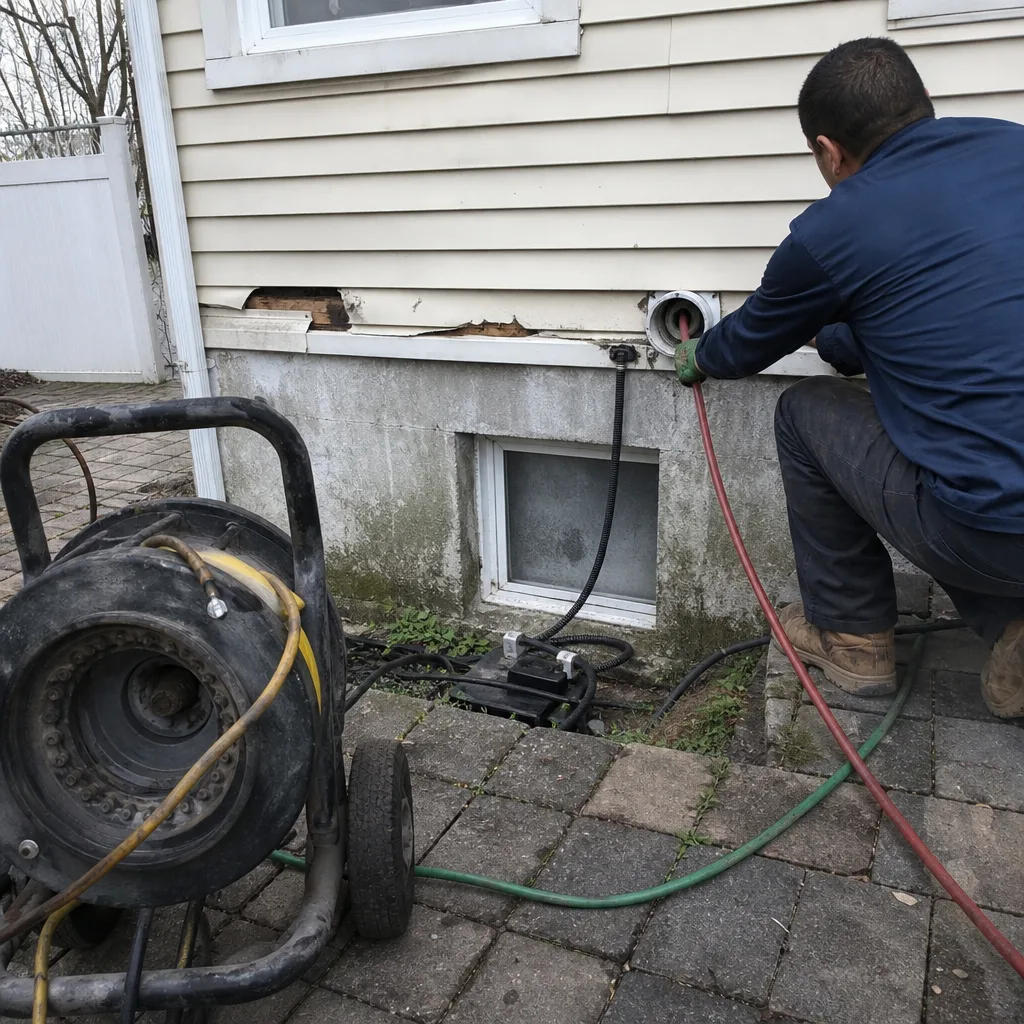 Before
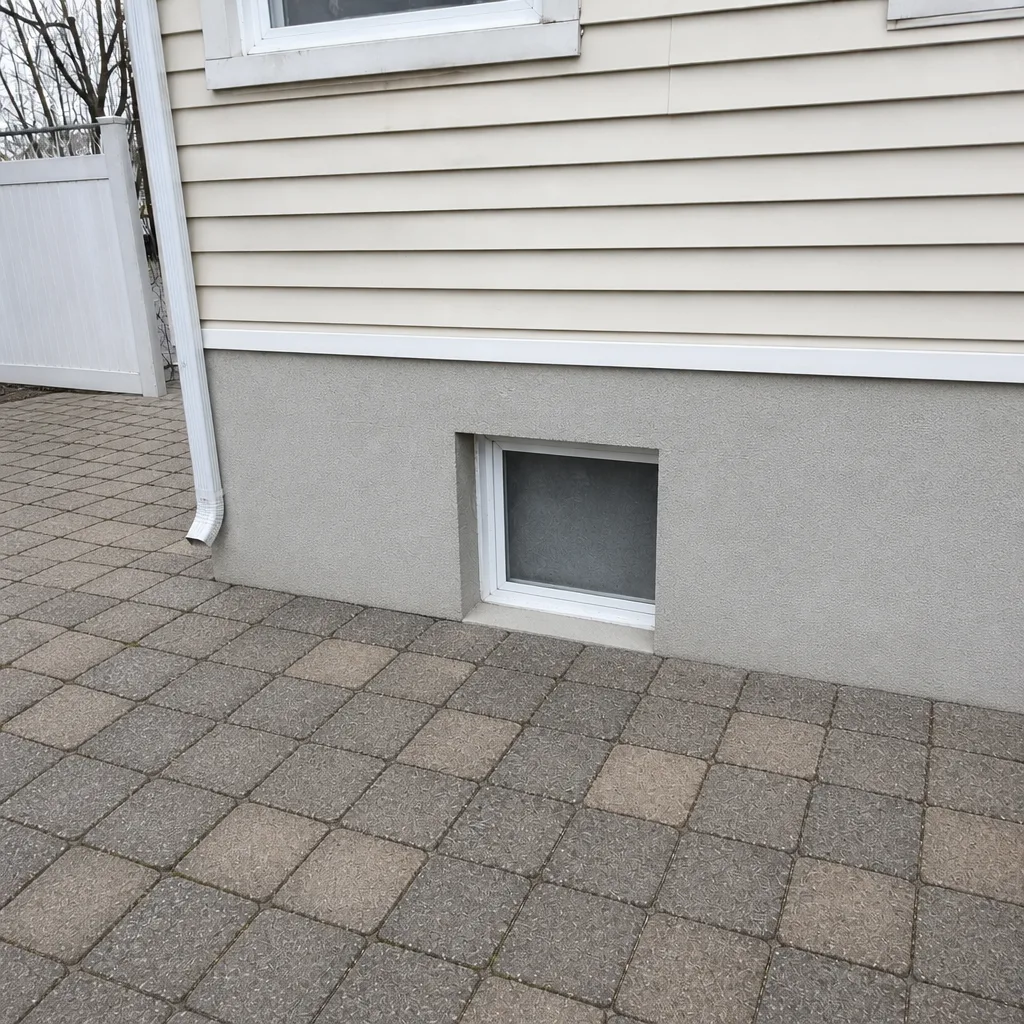 After
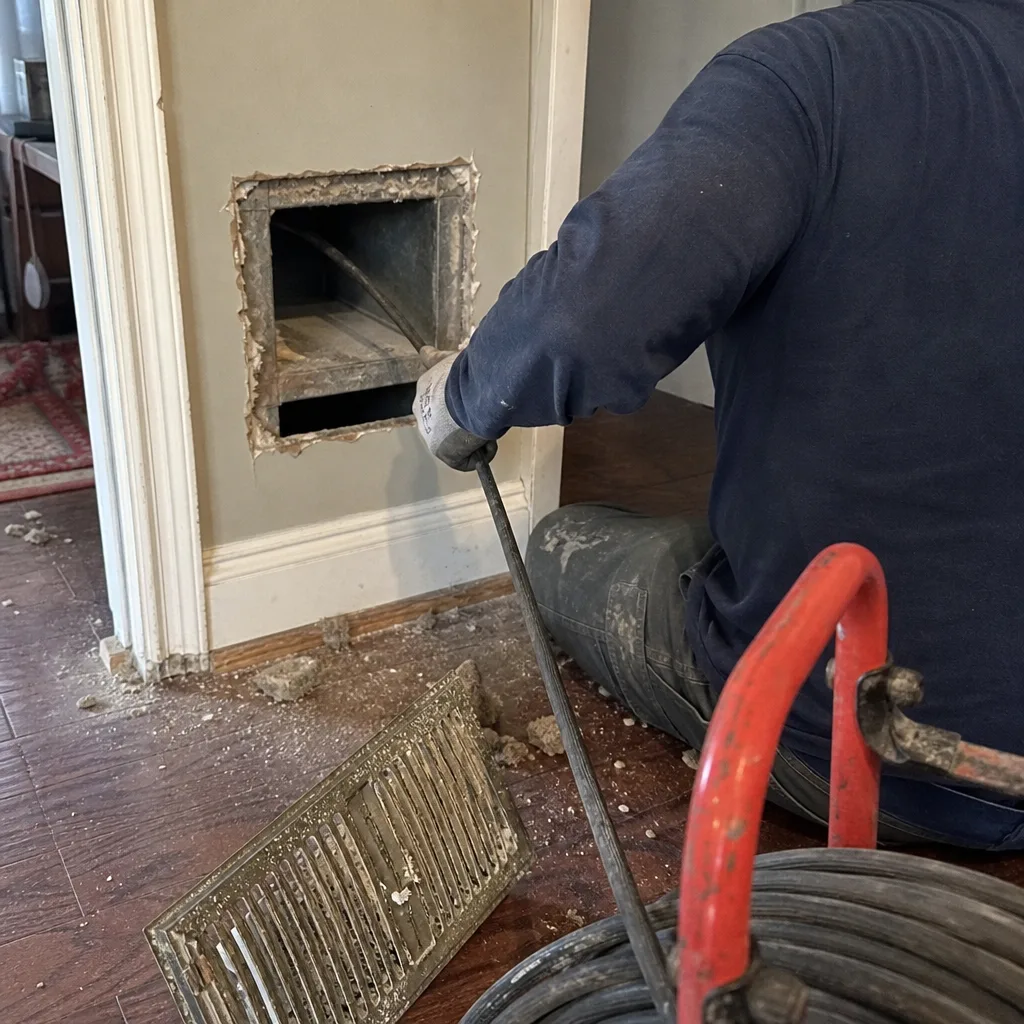 Before
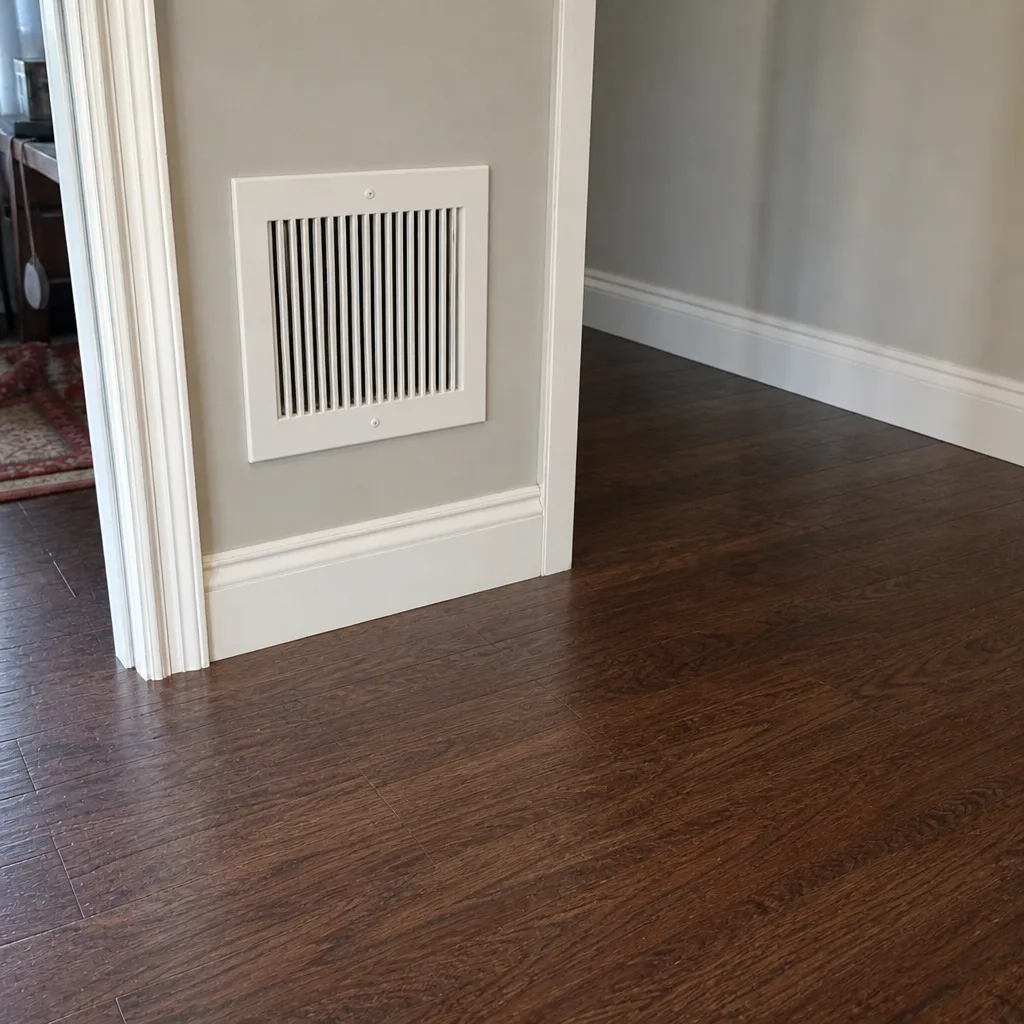 After
When to Call a Professional
Call a professional duct service when any of these are true: you’ve had a flood that reached a register or return grill, a fire in your unit or a neighboring unit, visible soot on registers, a musty smell after moisture exposure, an active construction project adjacent to your building, or a sudden spike in allergy symptoms without a known cause. The threshold is really “did anything change?” If a change happened, an assessment gives you a documented answer instead of a guess. Air Duct Cleaning Long Island City offers free estimates in Long Island City – call (833) 918-5344. Our technicians have up to 9 years of experience and work with Rotobrush, Nikro, Abatement Technologies, and Aprilaire systems on a full five-service scope: air duct cleaning, HVAC cleaning, dryer vent cleaning, duct repair & sealing, and air quality & sanitizing.
Frequently Asked Questions
As soon as the water has been stopped and the mechanical area is dry, schedule a professional duct inspection – within days, not weeks. Moisture inside ductwork supports biological growth quickly, and the longer wet debris sits in the system, the larger the remediation scope becomes. Call (833) 918-5344 for an exact quote – estimates are free.
No. Running the HVAC after a flood distributes moisture, silt, and biological growth into every branch line and room the system serves. Shut the system off at the breaker, photograph the visible intrusion, dehumidify the mechanical area with the ducts off, and have the system professionally inspected before restarting.
Cheaper quotes usually mean one of three things: consumer-grade equipment instead of Rotobrush and Nikro HEPA systems, no negative-pressure containment, or no clearance testing. Post-event contamination needs all three. The low number upfront often leads to a larger invoice once the technician is on site, which is why we set one flat price per system before the work starts. Call (833) 918-5344 for an honest whole-system estimate – estimates are free.
You know for two reasons: before-and-after photos of your own ducts, and a clearance report from air sampling equipment like the Abatement Technologies units used during professional post-event verification. If a company can’t produce both, the work isn’t documented enough to trust. Call (833) 918-5344 to schedule a clearance-verified cleanup – estimates are free.
Yes. Excavation and demolition generate fine silica and gypsum dust that enters through open returns, unsealed penetrations, and air exchange between buildings under negative pressure. The result is a slow, ongoing infiltration that shows up as faster filter loading, dust films that return within days, and new allergy symptoms since the work began. It’s worth getting inspected while construction is still active.
Once immediately after the event for containment and clearance verification, then on a standard cadence afterward – typically every few years for a normal home, or more often if you’re near active construction in Long Island City or someone in the household has respiratory sensitivity. Emergency events don’t reset the schedule; they start a new one.
The Bottom Line
Duct contamination after a flood, fire, or construction dust event is a real Long Island City scenario, and the response matters more than the event itself. Shut the HVAC system off first, document everything, and get a professional inspection before running the system again. Post-event cleaning only counts when it’s done with mechanical agitation (Rotobrush), HEPA negative-pressure containment (Nikro), and verification via air sampling with Abatement Technologies equipment. Emergency versus standard cleaning is a matter of scope and priority, not price premium. Get the documentation because it protects your health, your claim, and your system – in that order. And when in doubt, call before you turn the system back on.
If you’re in Long Island City and any of this sounds familiar, Air Duct Cleaning Long Island City offers a free estimate across the full five-service scope. Call (833) 918-5344. We answer 24/7. Fast dispatch from 7am to 7pm, Sunday through Friday.
Written by the team at Air Duct Cleaning Long Island City.