
Last updated November 22, 2026
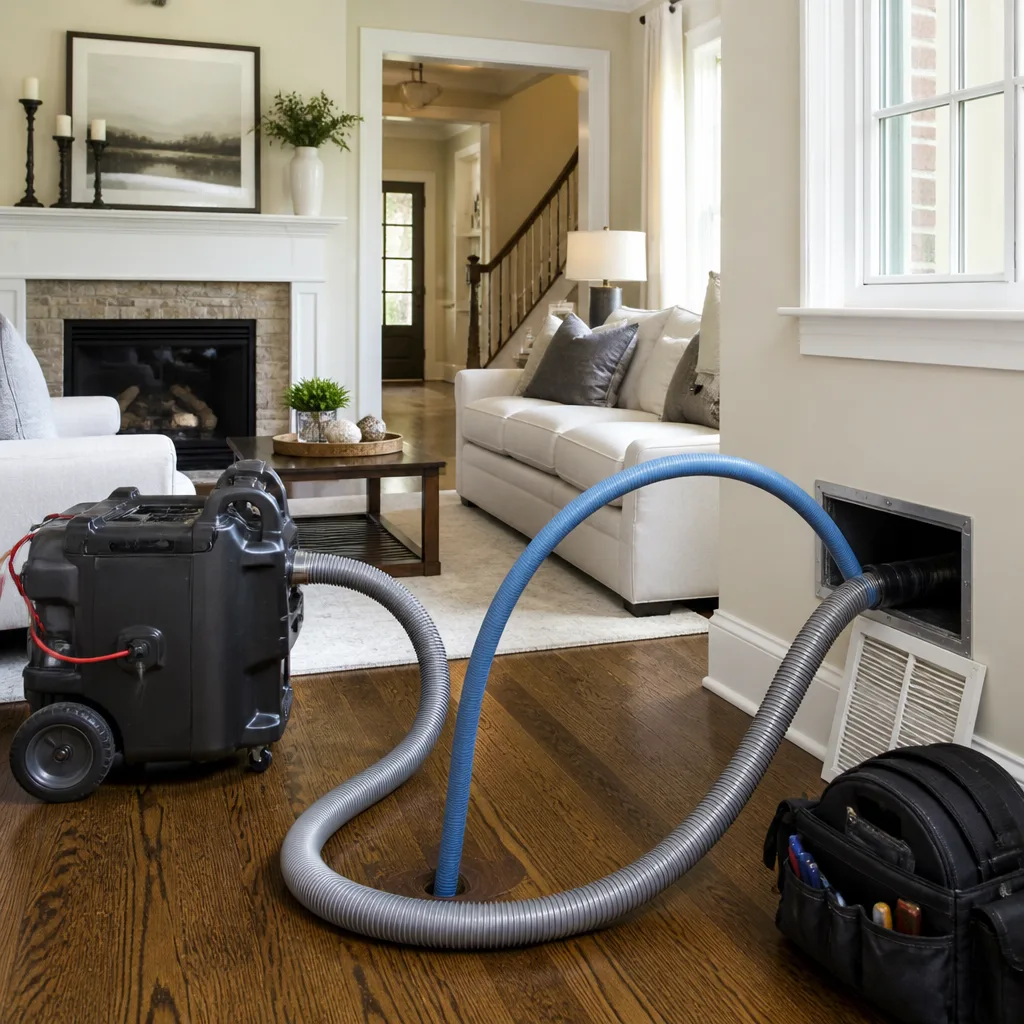 Whole-home duct cleaning
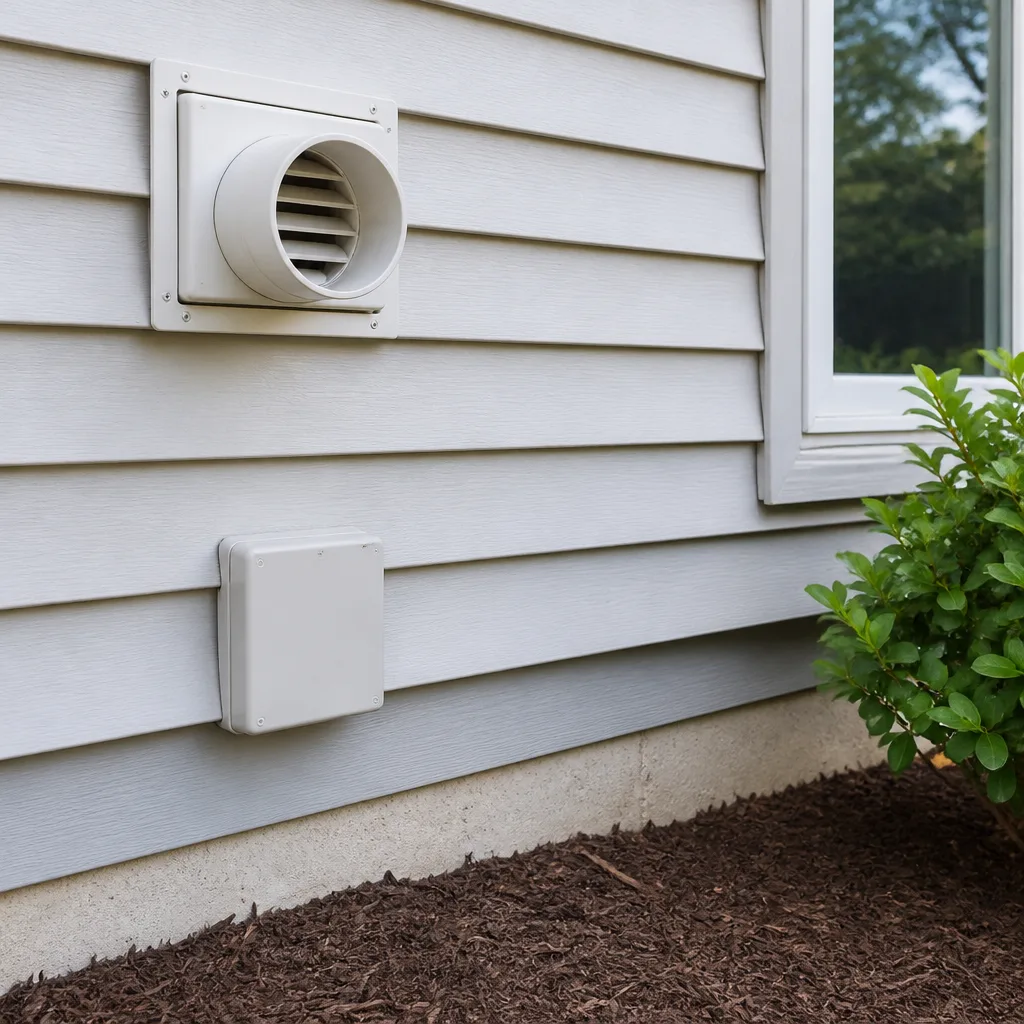 Dryer vent cleaning
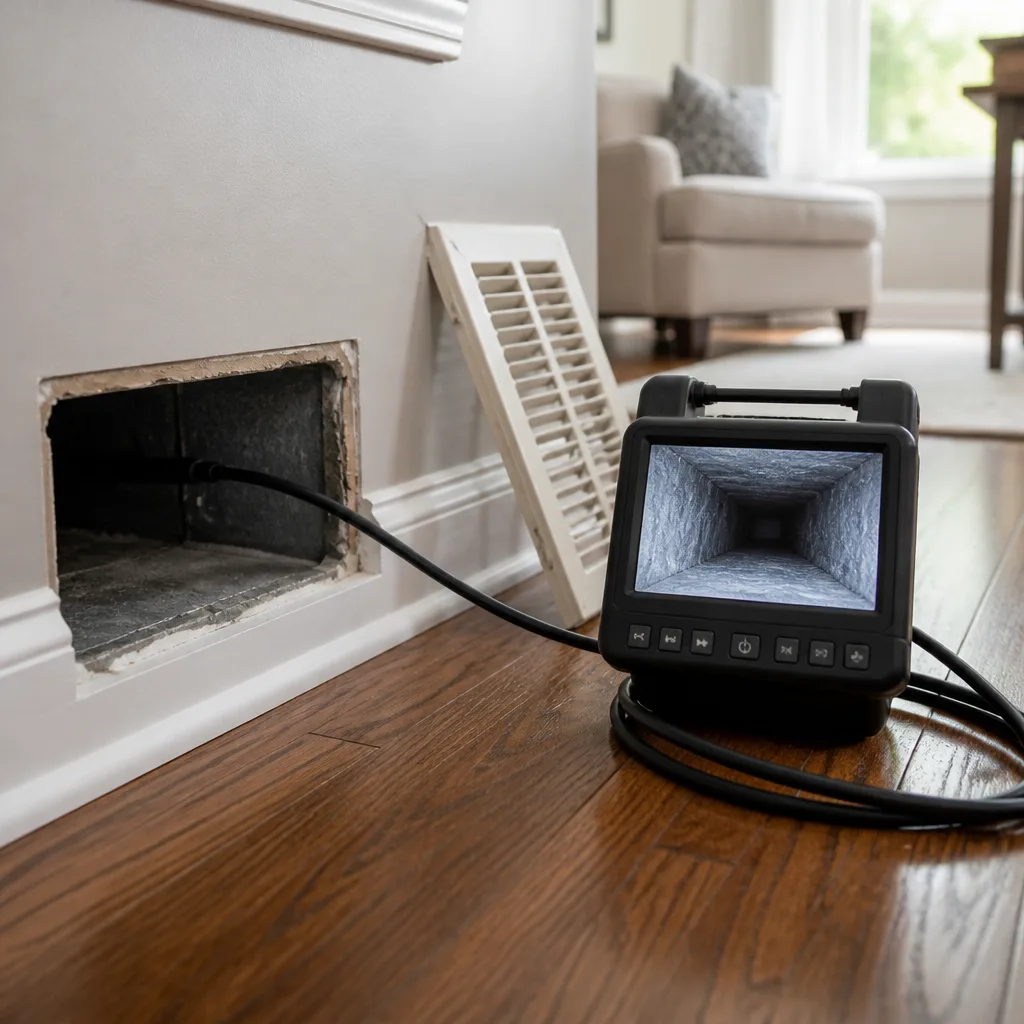 Camera inspection
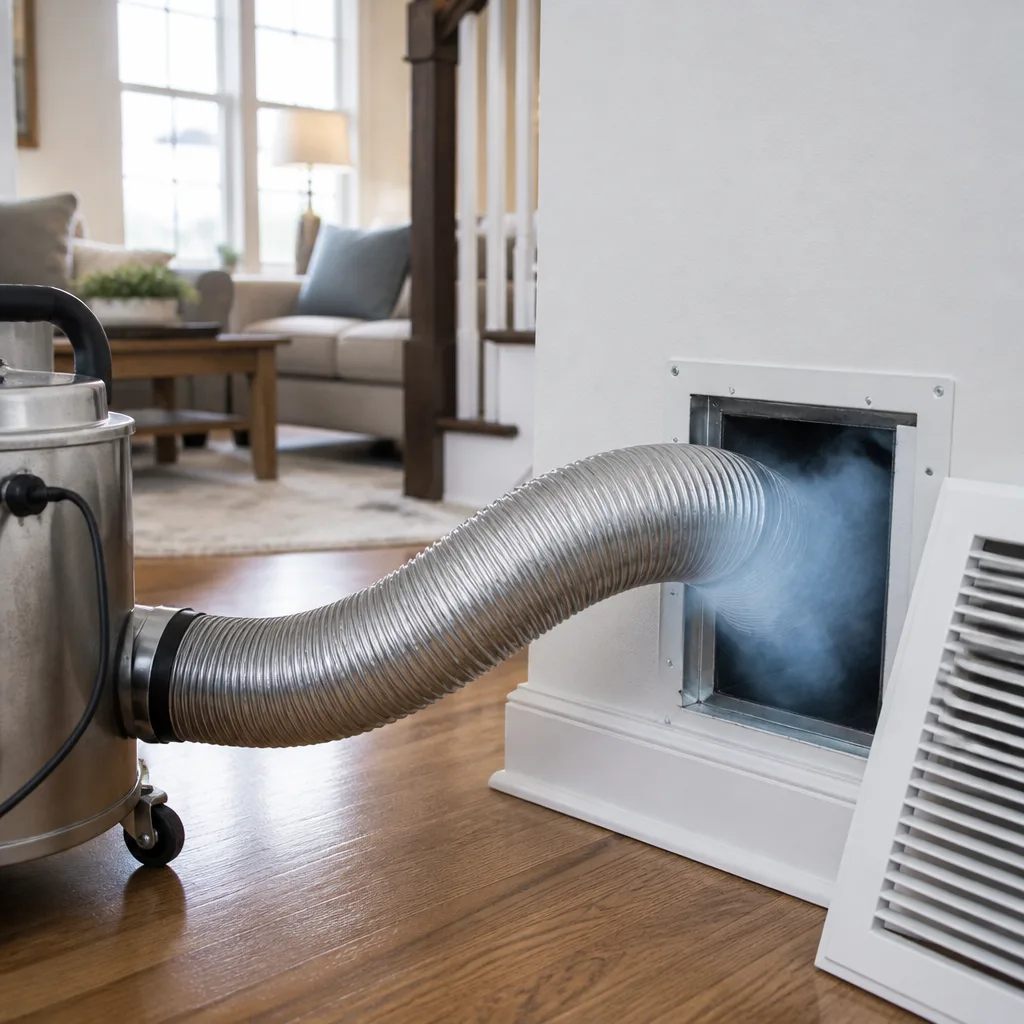 Sanitizing & deodorizing
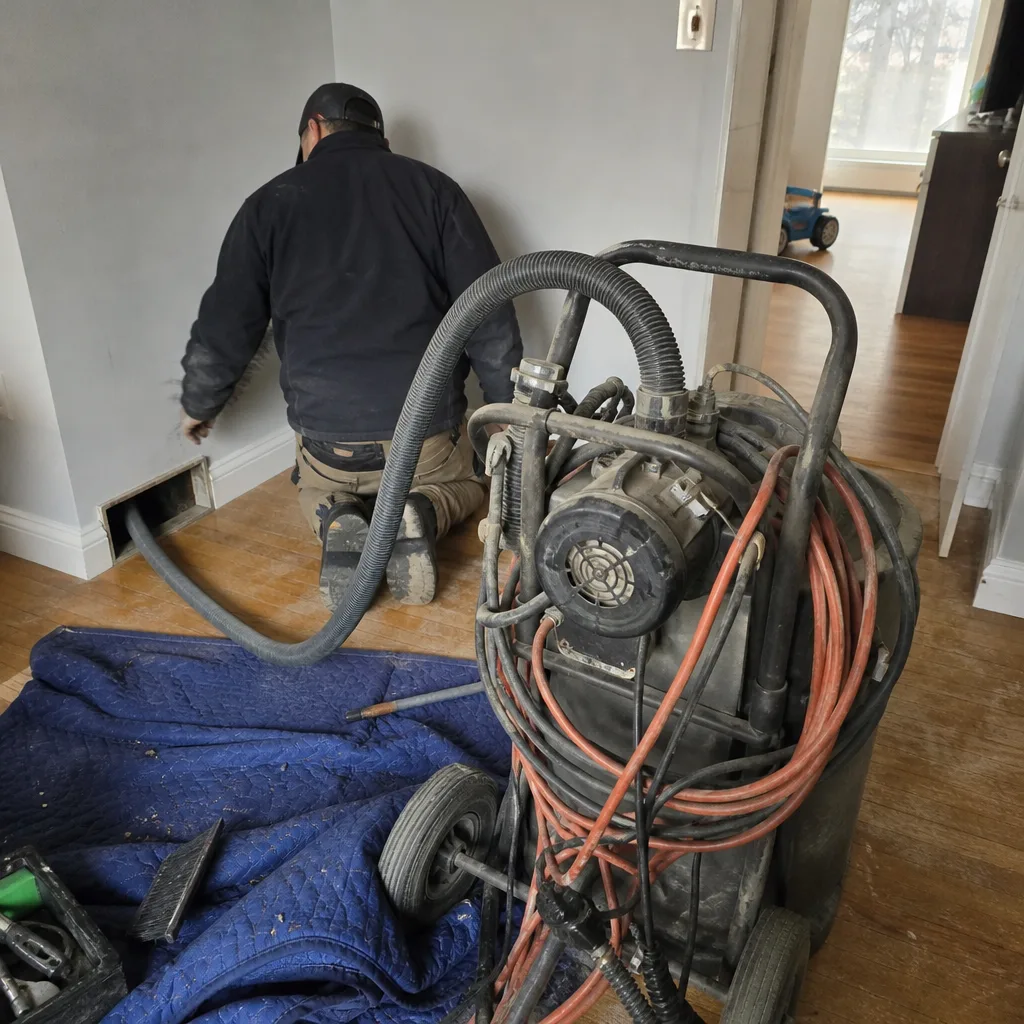
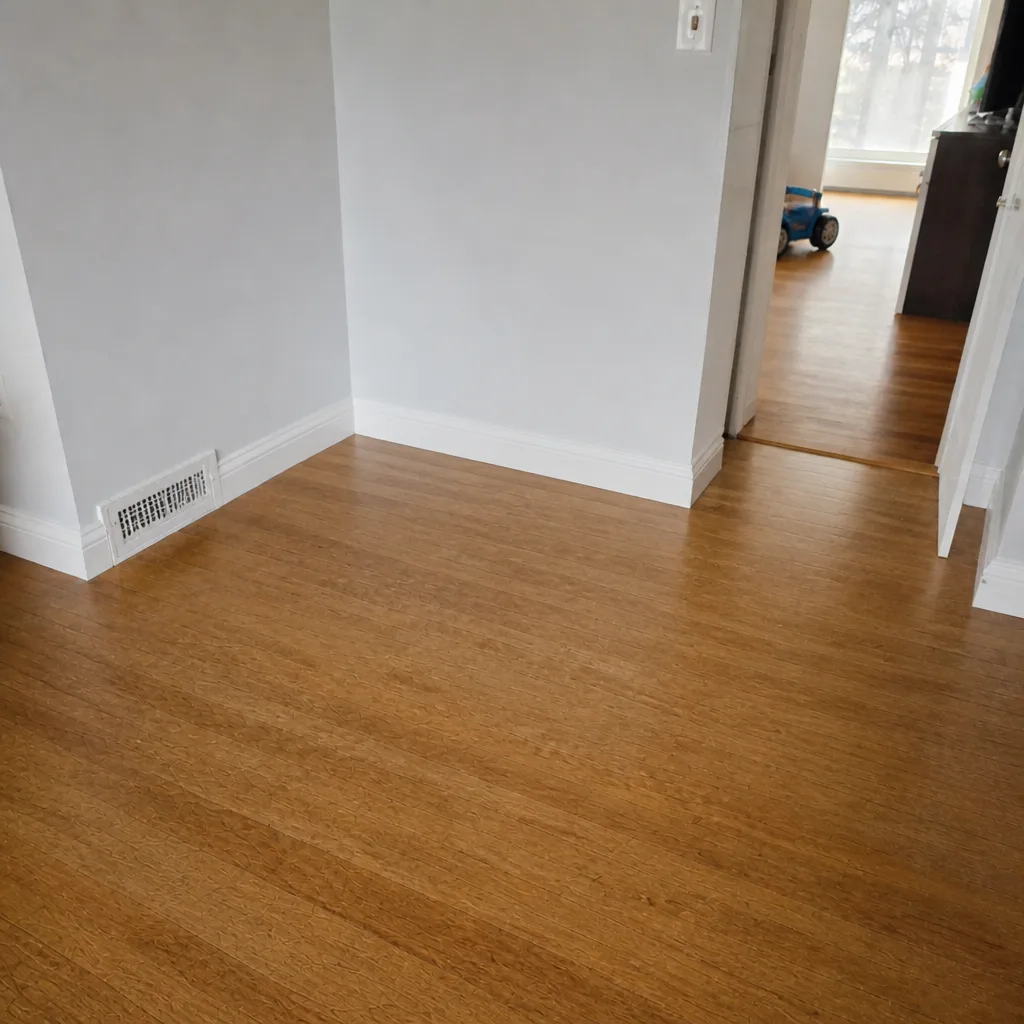
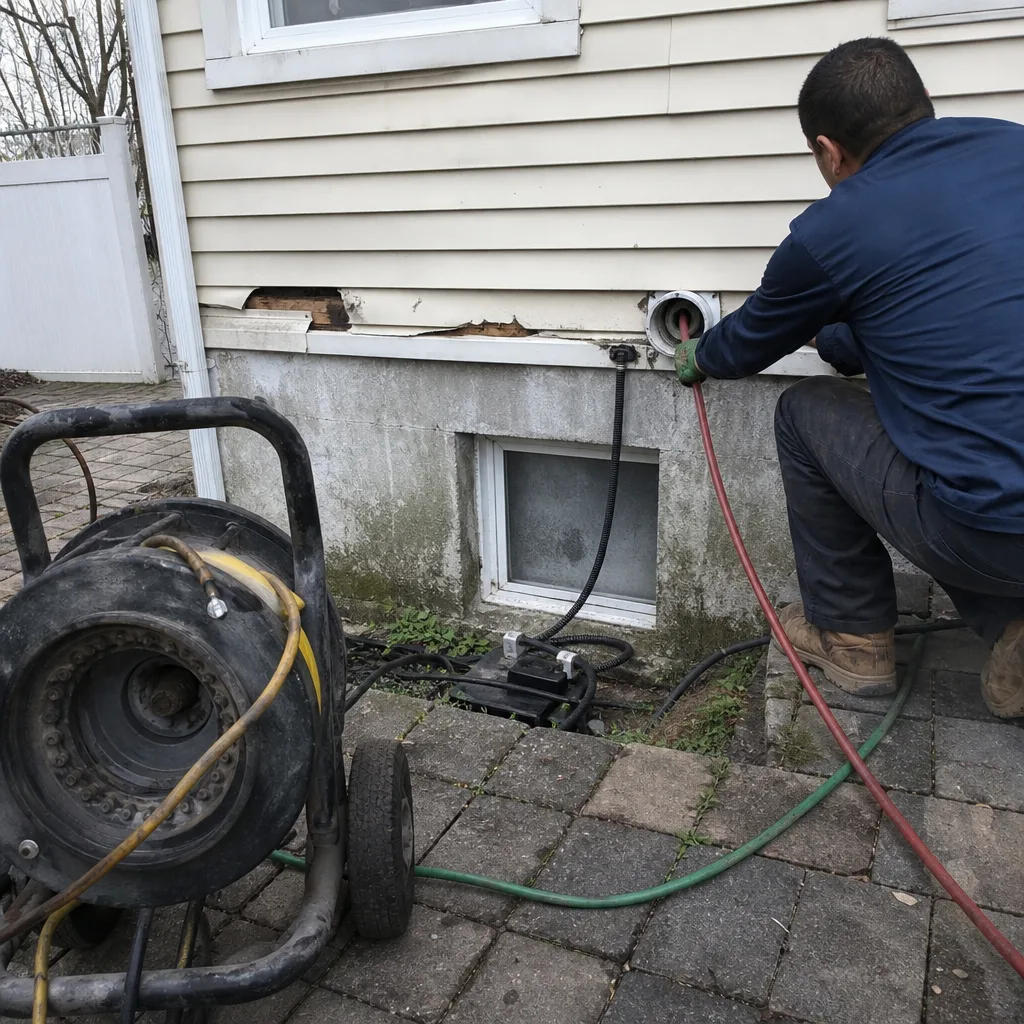
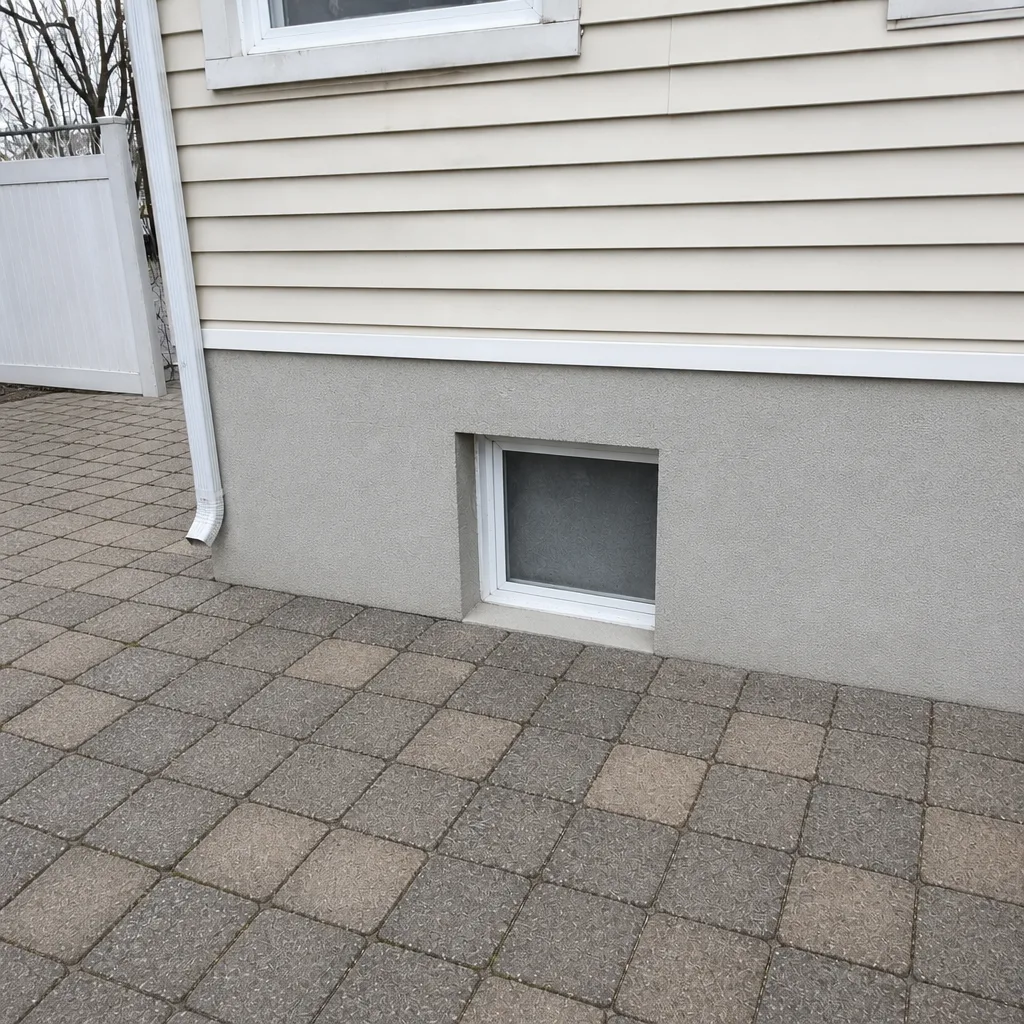
Whole-system duct and dryer vent check with before-and-after photos - you see exactly what came out of your vents
That "$99 whole-house special" is a bait ad - the real number appears once they are in your hallway, or the "clean" is a shop-vac at the register. We photograph the inside of your ducts before and after instead.
Air Duct Cleaning Permits, Codes & Inspections in Long Island City, NY: What You Need to Know
Most people assume duct cleaning is a completely unregulated chore. Book a van, they vacuum the vents, done. That holds true for a plain cleaning. But Long Island City isn’t a plain town, and a large share of its housing stock predates the 1980s. In those buildings, the moment a job stops being cleaning and starts being duct modification, mold remediation, or work near materials that could contain asbestos, the rules change entirely. A homeowner who booked a routine service can suddenly be looking at NYC Department of Buildings filings and federal asbestos protocol. This guide maps the line for you: what requires a permit, what triggers a filing, who’s responsible in a co-op or rental, and how to protect yourself before anyone climbs into your ceiling.
Quick Answer
Standard air duct cleaning in Long Island City does not require a permit under NYC rules. Permits and filings come into play when the job crosses into ductwork modification, ventilation system alteration, mold remediation above routine cleaning, or disturbance of suspect asbestos-containing materials. In pre-1980 buildings, any work near ducts can implicate EPA and NYC asbestos protocols regardless of what you thought you were hiring for.
Styles & brands we work with
- Whole-home duct cleaning
- Dryer vent cleaning
- Camera inspection
- Sanitizing & deodorizing
Table of Contents
- When Does Duct Cleaning Become a Permitted Activity?
- Asbestos in Pre-1980 Long Island City Buildings
- Mold Cleaning vs. Mold Remediation: The Regulatory Split
- What Inspections and Documentation to Ask For
- Co-ops, Rentals, and Who Owns the Permitting Question
- NYCHA and Rent-Stabilized Buildings
- How a Compliant Job Actually Runs
- Reading a Contractor’s Qualifications
When Does Duct Cleaning Become a Permitted Activity?
Cleaning the inside of existing ductwork is maintenance, not construction. That distinction matters: NYC’s permitting requirements target construction work, alterations, and changes to building systems. A contractor scraping years of dust out of the ducts, containing it under negative pressure, and putting the system back exactly as found doesn’t alter anything. No filing. No permit.
The line gets crossed when the work changes the system itself. Here’s how we draw it in practice:
- Pure cleaning: brushing, agitation with a rotary brush, HEPA vacuum extraction. No permit.
- Duct repair and sealing: resealing joints and seams that leak, using mastic or approved sealants. Generally no permit if you’re not changing the system’s configuration or capacity.
- Duct modification: rerouting a run, adding or removing a duct section, changing a run’s size, adding a new supply or return. This is alteration territory and can require a DOB filing, especially in a multi-unit building.
- HVAC system changes: a new unit, changes to how the ventilation system is configured at the mechanical level. Permit territory.
- Asbestos disturbance: any work that would disturb suspect materials near ductwork. A separate regulatory track entirely.
In our experience in Long Island City, the tipping point is rarely what the homeowner originally wanted. They wanted cleaner air or a quieter system. Then the technician opens a plenum and finds compromised flex duct or a disconnect that’s spilling conditioned air. Suddenly we’re talking about replacement, and that changes the paperwork. Good contractors announce that shift before they start, not after.
Asbestos in Pre-1980 Long Island City Buildings
Long Island City carries a heavy concentration of pre-1980 building stock – the old industrial conversions in Hunters Point, the walk-ups along Vernon Boulevard, the mid-century apartment buildings near Queens Plaza. If your building was constructed or renovated before the 1980s, there is a genuine possibility that materials around your ductwork contain asbestos. That’s not alarmism; it’s a documented feature of American construction of that era.
What materials to suspect around ductwork
- Duct wrap and insulation: older ducts often used asbestos-containing thermal insulation as a wrap or inner lining.
- Joint tape and mastic: older duct-sealing compounds sometimes incorporated asbestos.
- Adhesives and sealants at duct transition points and plenum connections.
- Materials near ducts: pipe insulation, wallboard compounds, floor tiles, and fireproofing in the same mechanical areas.
What does the protocol look like if suspect material is present? Under NYC Department of Environmental Protection rules, disturbance of asbestos-containing materials must be handled by a licensed asbestos contractor following federal and local protocol. That means:
- Sampling and lab analysis by a qualified party before work begins.
- Written notification requirements to the appropriate agency before abatement.
- Containment of the work area under negative pressure with HEPA filtration.
- Wet methods to suppress fiber release wherever possible.
- Full decontamination and clearance verification before the area is reoccupied.
A standard air duct cleaning firm cannot do this work. If you own or manage a building of this vintage, ask for an asbestos survey before hiring anyone to touch the ducts – or insist that your duct cleaning contractor stop and refer out if suspect material surfaces. The honest answer to “can you vacuum around this suspicious duct wrap?” is no.
Mold Cleaning vs. Mold Remediation: The Regulatory Split
Here’s a distinction most homeowners never hear: cleaning visible mold off a duct surface is not the same as mold remediation. The first is maintenance. The second is a regulated category of work with specific requirements for the people doing it and the documentation they produce.
The practical difference
Surface cleaning – wiping down interior duct surfaces where minor growth exists – can be handled by a properly equipped duct cleaning contractor using antimicrobial treatment as part of the job. It’s part of the broader work: agitation, extraction, then sanitizing the clean interior with an EPA-registered antimicrobial product.
Remediation is different. When mold has penetrated porous materials – fiberglass duct board, flex duct lining, insulation – cleaning may not resolve the problem. Source removal, sometimes involving replacement of affected sections, plus containment, plus verification, is remediation territory. New York State regulates mold assessment and remediation as distinct licensed disciplines. A remediation job should be performed or supervised according to those rules, and the work should end with documentation: what was found, what was removed, and a verification that the problem is resolved.
Why this matters for duct cleaning in Long Island City: damp conditions caused by AC condensation issues, roof leaks in older buildings, or chronically humid basements in converted industrial spaces make mold growth a real possibility. If your contractor finds more than surface-level contamination, the right move is a referral, not a stock answer. A duct cleaning company that claims to handle everything is worth a second look.
What Inspections and Documentation to Ask For
Part of the reason duct cleaning has a spotty reputation is that a homeowner has no easy way to verify what was actually done. The good news: you can require documentation. Ask for it upfront, before the work is scheduled.
Documentation to request
- Pre-work photos: before-and-after photos of your own ducts. Not stock photos. Yours.
- Written scope: what will be cleaned, what won’t, and why. This is the written estimate that also sets your price.
- Equipment description: what system is being used – rotary brush agitation, negative pressure setup, HEPA filtration. On our jobs, that’s a Rotobrush or Nikro system paired with Abatement Technologies negative-pressure containment.
- Post-work report: what conditions were found, what was cleaned, any repairs recommended, and any findings that call for a referral (mold, asbestos, damaged ductwork).
- Building notification: in a co-op or HOA context, proof that building management was notified where required.
If a co-op board, landlord, or property manager is involved, ask what documentation they require. Many want to see the scope in writing before work begins, especially if the technician will be opening wall access panels or drilling anywhere. The time to figure that out is not when the technician is on the ladder.
Inspections worth having
Two kinds of inspection matter here. A visual inspection of accessible ductwork – where the technician uses a camera or opens access points – is standard and should be part of the job. A mold or asbestos inspection, when suspect conditions exist, requires a licensed inspector in that discipline. Don’t accept a duct cleaning contractor’s verbal assurance in place of a licensed assessment when the question is mold or asbestos.
Co-ops, Rentals, and Who Owns the Permitting Question
Permits and filings in New York City attach to buildings and to owners. In Long Island City, where co-op and condo conversion has reshaped much of the housing market over the last two decades, that creates a genuinely confusing question: whose responsibility is it?
The short answer: the underlying owner-of-record is the party that typically pulls permits and files for building work. That could be a co-op corporation, a condo’s board acting through a managing agent, or a landlord. A shareholder within a co-op typically doesn’t pull their own permits – they request approval through the managing agent, who coordinates with the licensed contractor.
What that means in practice
- Co-op shareholder: notify the managing agent before scheduling work that involves opening walls, cutting access panels, or touching ductwork that serves common areas. Get written approval. Some buildings require licensed-and-insured contractor certificates before access is granted – reasonable to ask for.
- Condo owner: the board typically has rules about any work affecting shared systems. If your ductwork serves only your unit, you may have more latitude, but read the house rules and make sure you’re not violating them.
- Renter: you generally don’t pull permits. You request service from your landlord, who decides how to proceed. You are not responsible for the work being permitted correctly – but you are the person living with the results, so it’s fair to ask for documentation.
- Property manager: your job is to confirm licensed contractors, insurance certificates, work notification, and records of what was done. Make sure it’s on file.
What we’ve seen go wrong: an owner or board member approves a job verbally, the technician finds a duct modification is needed mid-job, and nobody is sure who’s supposed to file what. The right structure is a written scope approved before the work starts, a clear statement of who pulls what paperwork if the scope changes, and a stop-and-consult rule.
NYCHA and Rent-Stabilized Buildings
Large public and regulated housing raises its own set of considerations. NYCHA properties follow NYCHA’s own policies for resident service requests, vendor access, and work authorization. If you’re a NYCHA resident and you’ve noticed musty smells, uneven airflow, or visible dust coming from vents, the right first step is a work order through the property. Trying to schedule an unauthorized contractor for work in a NYCHA building is not a shortcut – it’s a complication.
Rent-stabilized buildings fall under New York State housing rules with their own obligations to tenants around habitable conditions. If poor air quality is a recurring issue – and ductwork that hasn’t been serviced is a reasonable candidate – tenants have a path to request that the building address it. Documentation helps: photos, dates, symptoms, and a written request to the landlord or managing agent. A duct cleaning that a landlord arranges as a response should still be a professional, documented job with scope and reporting, not a token gesture.
In our experience, the co-op, condo, and larger rental buildings of Long Island City tend to have the most formal documentation requirements, and the residents usually benefit from that structure. Building-specific rules around access, work notification, and contractor credentials exist for good reason, and a contractor who treats those rules as an inconvenience is telling you something.
How a Compliant Job Actually Runs
Here’s what a properly executed duct cleaning in Long Island City looks like from start to finish. This gives you a baseline to compare any quote against.
- Written scope and price. One flat price per system, agreed before work begins. Not per vent. Not a teaser. The written estimate sets the final price.
- Pre-work inspection. Visual inspection of accessible ductwork. If suspect materials, mold beyond surface level, or damaged ductwork is discovered, the job pauses for referral. This is the correct behavior, not a sign the contractor is stalling.
- Building notification. If co-op, condo, or rental rules require it, the building is notified before access.
- Negative-pressure containment. HEPA-filtered vacuum equipment – Nikro or Abatement Technologies – puts the entire duct system under negative pressure so disturbed debris can’t escape into the living space.
- Mechanical agitation. Rotary brush equipment – Rotobrush on our jobs – continuously agitates dust, debris, and contaminants off interior surfaces. Brushing alone isn’t enough; the containment has to be running.
- Source removal. Loose debris is extracted under HEPA filtration, not blown back through the supply vents.
- Sanitizing. A clean interior is treated with an antimicrobial product where appropriate. Honeywell and Aprilaire filtration products are integrated where air quality treatment calls for them.
- Duct repair and sealing where needed. If leaks or disconnections were found, joining seams are sealed as part of the same visit.
- Post-work photos and report. Before-and-after photos of your own ducts plus a written report on findings and any recommendations.
- Post-work verification. Airflow checks, and confirmation that remediation-class findings have been referred to the licensed party that handles them.
The system-level approach matters because cleaning is often one of several services a home actually needs. Alongside air duct cleaning, the work here includes HVAC cleaning, duct repair and sealing, air quality and sanitizing, and dryer vent cleaning – the last being a genuine fire-prevention step that too many duct-only companies skip. These services are coordinated as needed on a single visit.
Reading a Contractor’s Qualifications
You don’t need to be a building inspector to spot a contractor who’ll create problems. You need to know what to ask and what to listen for.
- Ask what happens if they find asbestos or mold. A qualified contractor stops and refers. A contractor who says “we handle that too” without a referral is a red flag.
- Ask whether they’ll provide written scope and photos. “We’ll take a look and let you know” is not documentation. You need it in writing.
- Ask what equipment they use. “A super high-powered vac” is not an answer. You want specific equipment named. Rotobrush, Nikro, Abatement Technologies are the names we use, and they should be willing to tell you theirs.
- Ask about insurance and licensing as their state requires. The local professionals your contractor connects you with should be able to show that they’re licensed and insured as required.
- Ask what building notifications they handle. In a co-op or condo, a good contractor walks you through what approvals you need, rather than telling you to figure it out.
- Be suspicious of a coupon. A price advertised for one vent, that becomes something else entirely once the technician is inside, is a bait-and-switch. Honest providers quote whole-system.
For more context on the service itself, the air duct cleaning Long Island City page is a good place to start, and the HVAC cleaning page explains how the two services differ in scope.
Common Mistakes to Avoid
- Assuming “duct cleaning” means “any duct work.” Homeowners in Long Island City often call for cleaning and end up needing duct repair, sealing, or replacement. Ask the contractor to identify the scope in writing before the visit, not after.
- Skipping the asbestos question in a pre-1980 building. If your building dates before the 1980s and the technician is going to disturb anything around the ducts, ask for the survey. This is the single most consequential mistake we see, and it’s usually driven by urgency, not ignorance.
- Accepting a verbal scope instead of a written one. Verbal conversation is fine for the pitch. Written scope is the only thing that matters for co-op boards, landlords, and your own protection if the work changes mid-job.
- Confusing mold cleaning with mold remediation. Surface treatment on duct interior surfaces is part of cleaning. Penetrating mold in porous duct materials is a regulated remediation job. Getting the second one done by the first crew is a documentation and liability problem waiting to happen.
- Scheduling work without notifying the building. In a Long Island City co-op or condo, opening wall access or touching shared ductwork without written approval from the managing agent creates real friction later.
- Choosing the cheapest per-vent quote. A per-vent advertised price often excludes key steps like containment, agitation, and sanitizing. Whole-system pricing gives you something to compare.
- Not asking for before-and-after photos of your own ducts. If a contractor can’t or won’t show you the interior of your ducts before and after, you have no way to confirm the work was done.
See the difference
 Before
 After
 Before
 After
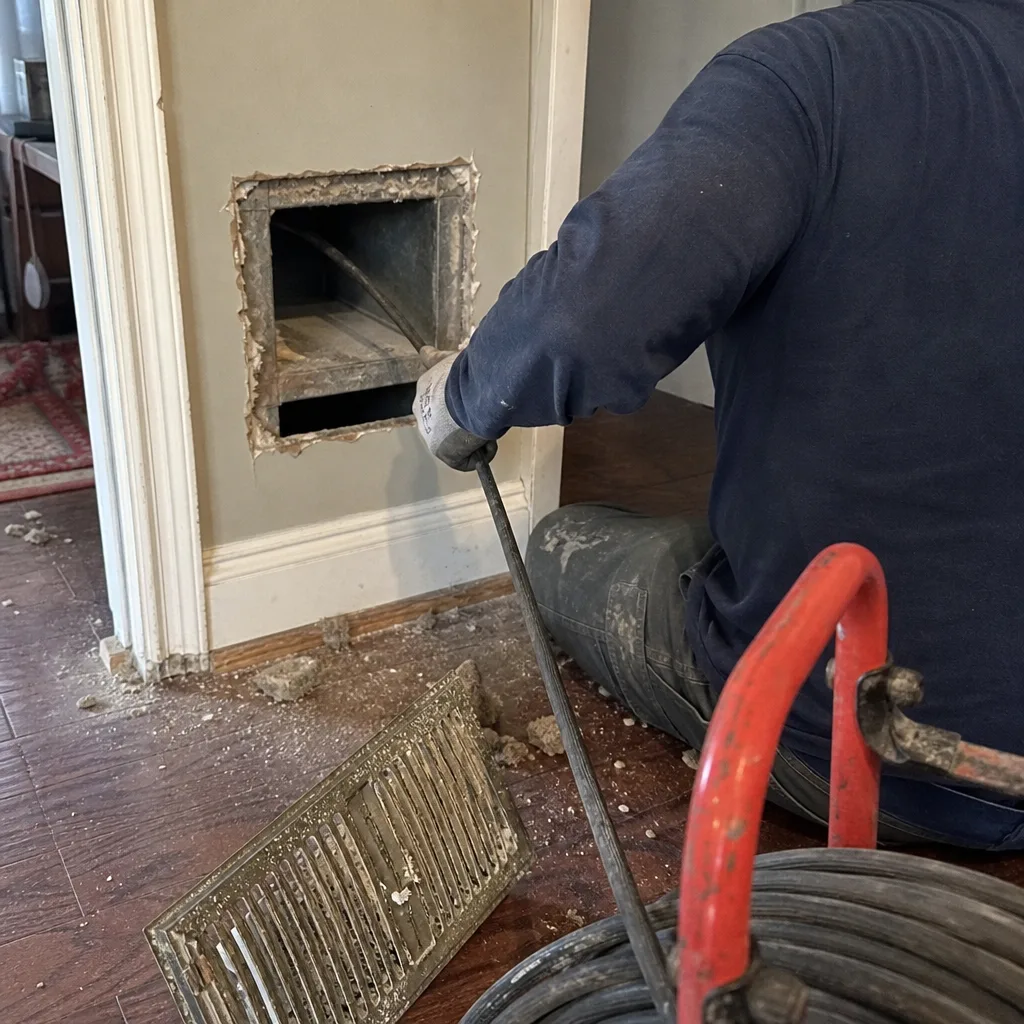 Before
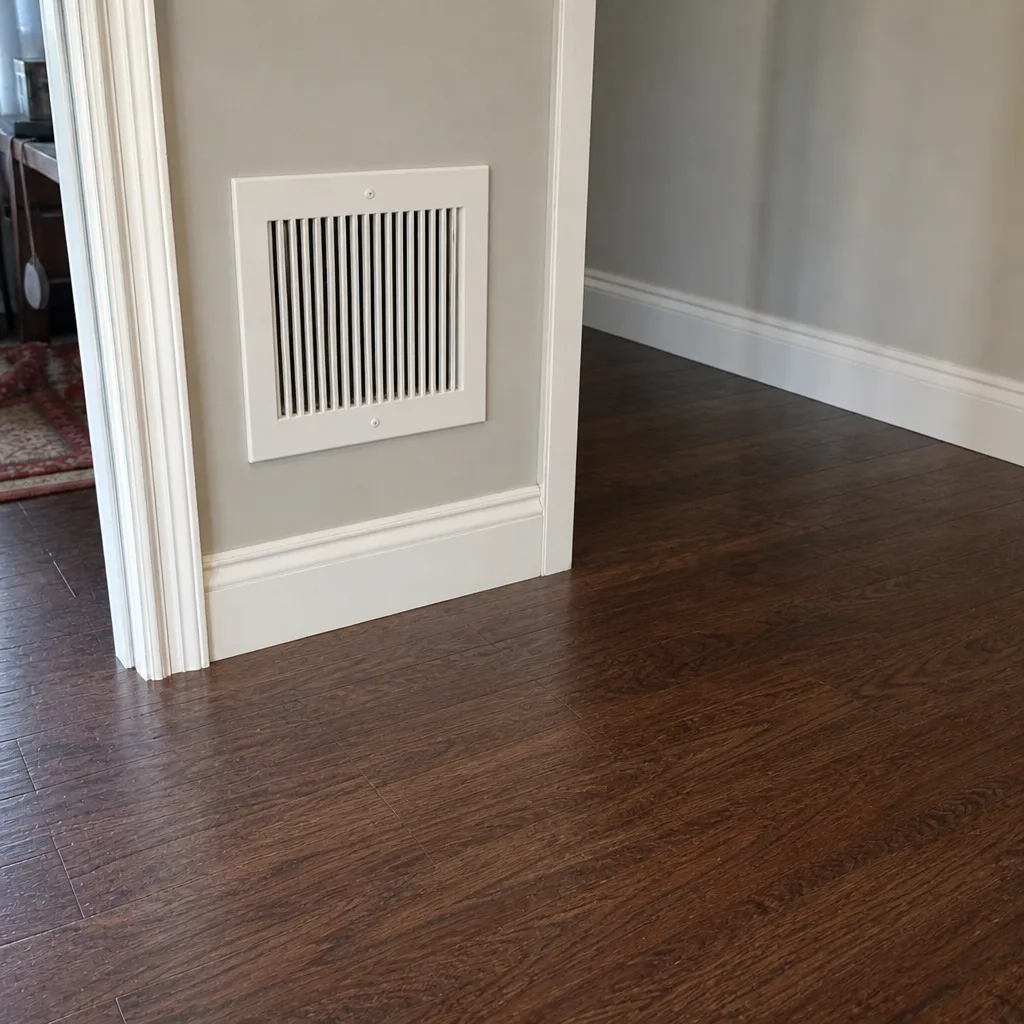 After
When to Call a Professional
There’s a category of duct problems you can defer a few weeks. There’s another category where waiting is the wrong call. Call a professional when you notice musty or persistent odors coming from vents, uneven airflow between rooms, visible dust settling on surfaces shortly after cleaning, or allergy-type symptoms that flare up indoors and resolve outdoors. In a Long Island City building constructed before the 1980s, any of those symptoms plus a plan to touch the ductwork should prompt the asbestos question before work begins. If a landlord, co-op board, or property manager is involved, the professional call includes getting the scope and documentation in writing. Air Duct Cleaning Long Island City offers free estimates in Long Island City – call (833) 918-5344. Our technicians have up to 9 years of experience, and we work with Rotobrush and Nikro equipment to contain dust rather than redistribute it.
Frequently Asked Questions
No – standard air duct cleaning in Long Island City does not require a permit. Cleaning the interior of existing ductwork is maintenance, not construction. A permit or DOB filing becomes necessary when the job crosses into modifying the duct system, changing ventilation configuration, or disturbing suspect asbestos-containing materials.
You don’t, without testing. In pre-1980 buildings, duct wrap, joint tape, and adhesives from that era are the materials most likely to contain asbestos. The right approach is to arrange for sampling and lab analysis by a qualified party before any work disturbs those materials. If a technician finds suspect material, the correct response is to stop the job and refer out – not to vacuum around it and hope for the best.
Mold cleaning is surface treatment of visible growth – part of routine duct cleaning when growth is minor. Mold remediation involves source removal, containment, licensed oversight, and verification documentation, and it’s a separate regulated discipline. It matters for a duct job because if the mold has penetrated porous duct materials, cleaning alone won’t fix it, and the work needs to move into the remediation track.
Generally, the owner of record – the co-op corporation, condo board, or landlord – is the party that pulls permits and files for building work. Shareholders and renters typically request approval through the managing agent or landlord rather than pulling permits themselves. The right structure is written scope and written approval before work starts, with a clear statement of who handles paperwork if the scope changes.
No. NYCHA properties have their own policies for resident service requests, work authorization, and vendor access. The right first step is a work order through NYCHA’s property management. Scheduling an outside contractor for work in a NYCHA building without authorization creates complications for everyone involved.
We quote one flat price per system, agreed before work starts, rather than a per-vent teaser. The written estimate sets the final price. Call (833) 918-5344 for an exact quote – estimates are free.
The Bottom Line
Duct cleaning itself doesn’t require a permit in Long Island City. What requires attention is everything that can happen around the cleaning: duct modification that triggers DOB filings, suspect asbestos in pre-1980 buildings that must be handled by a licensed abatement contractor, mold damage beyond surface cleaning that belongs in the licensed remediation track, and building approval requirements in co-ops, rentals, and NYCHA properties. The rule of thumb is simple – clean what’s there, document what you did, and stop and refer the moment the work crosses from cleaning into alteration or contamination response. If you own or manage a Long Island City property and want a scope you can act on, air duct cleaning Long Island City is a reasonable place to start. Call (833) 918-5344 for a free estimate. We answer 24/7. Fast dispatch from 7am to 7pm, Sunday through Friday. The local pro is licensed and insured as their state requires, and we work from a written scope so nothing changes on you mid-job.
Written by the team at Air Duct Cleaning Long Island City.