
Last updated November 22, 2026
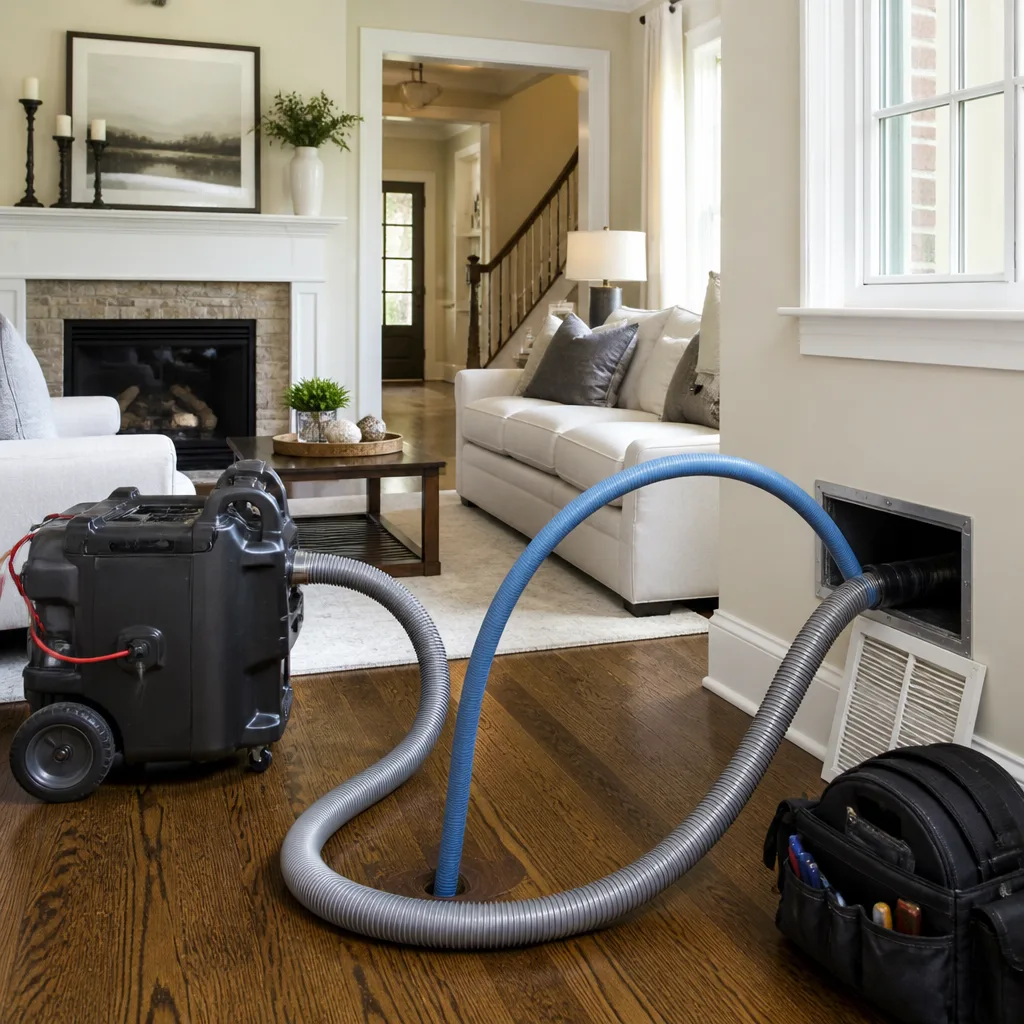 Whole-home duct cleaning
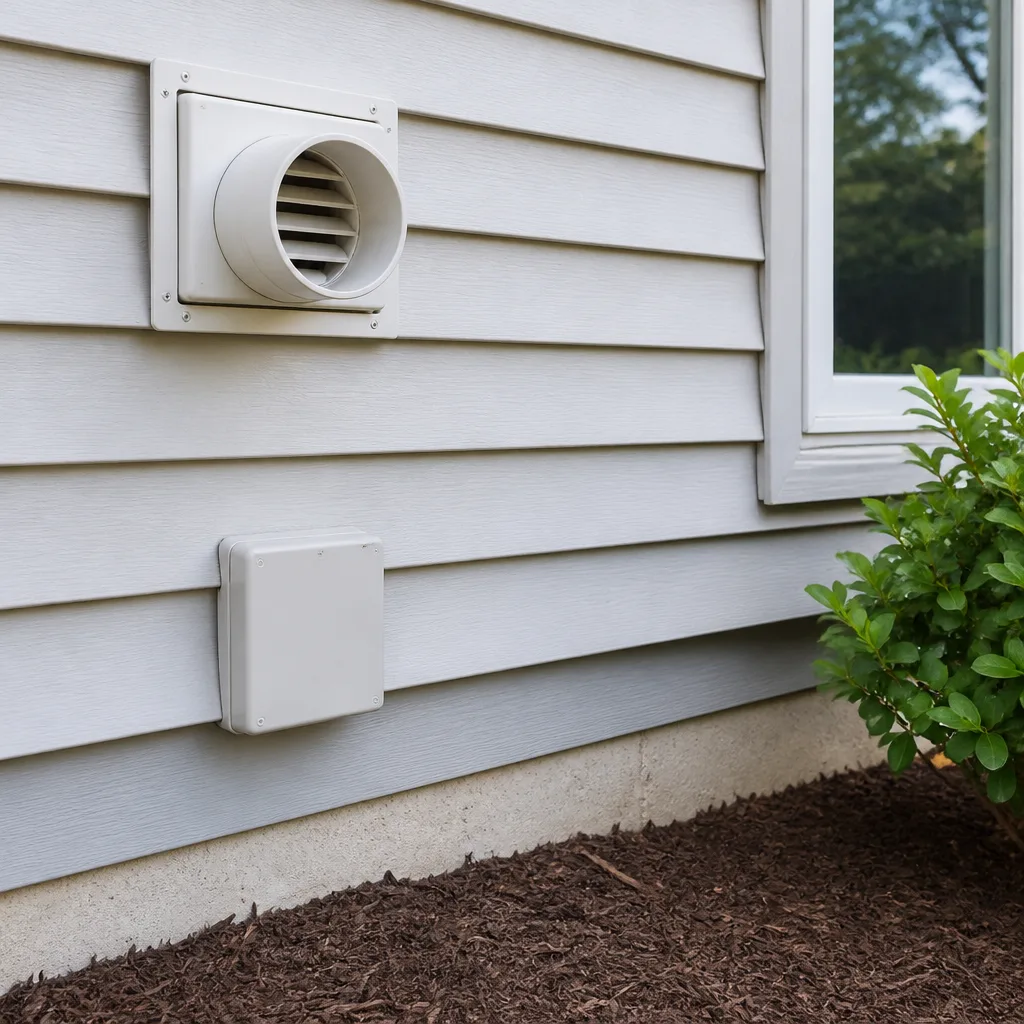 Dryer vent cleaning
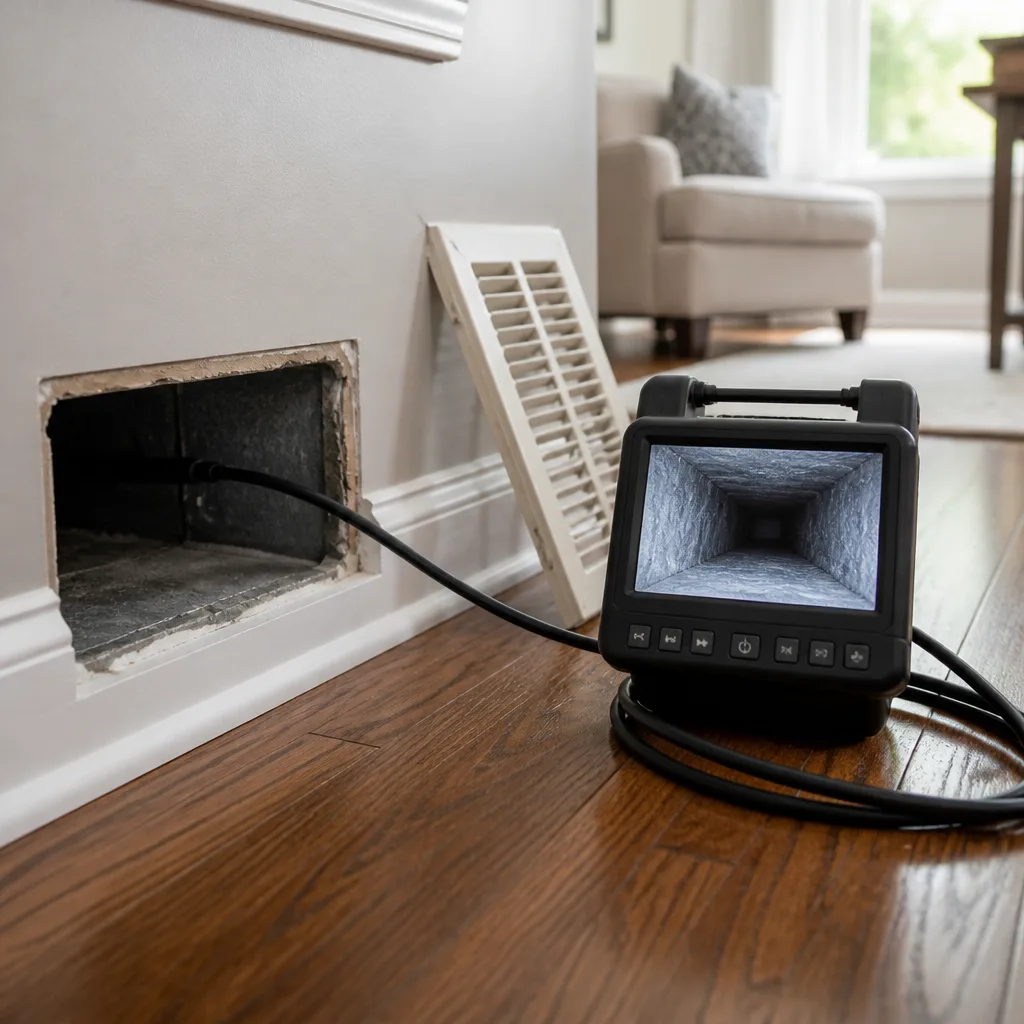 Camera inspection
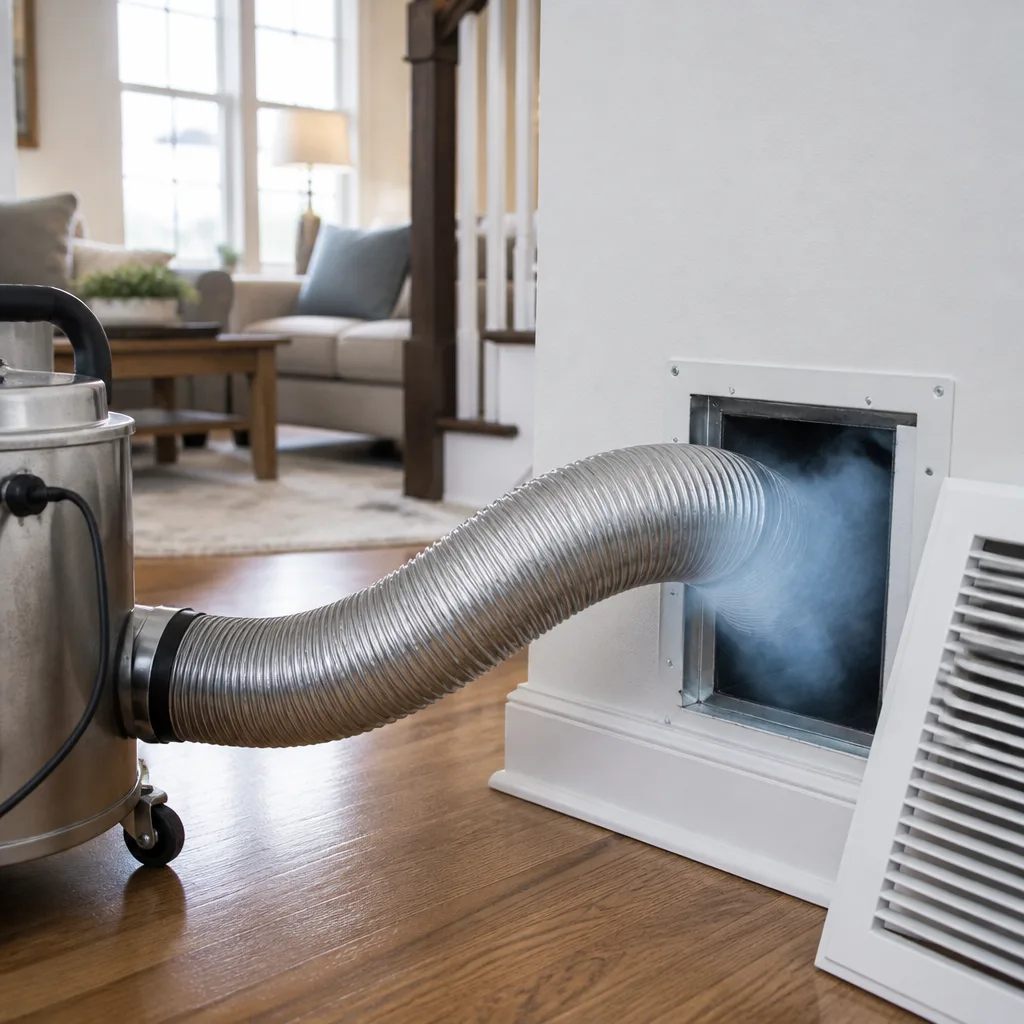 Sanitizing & deodorizing
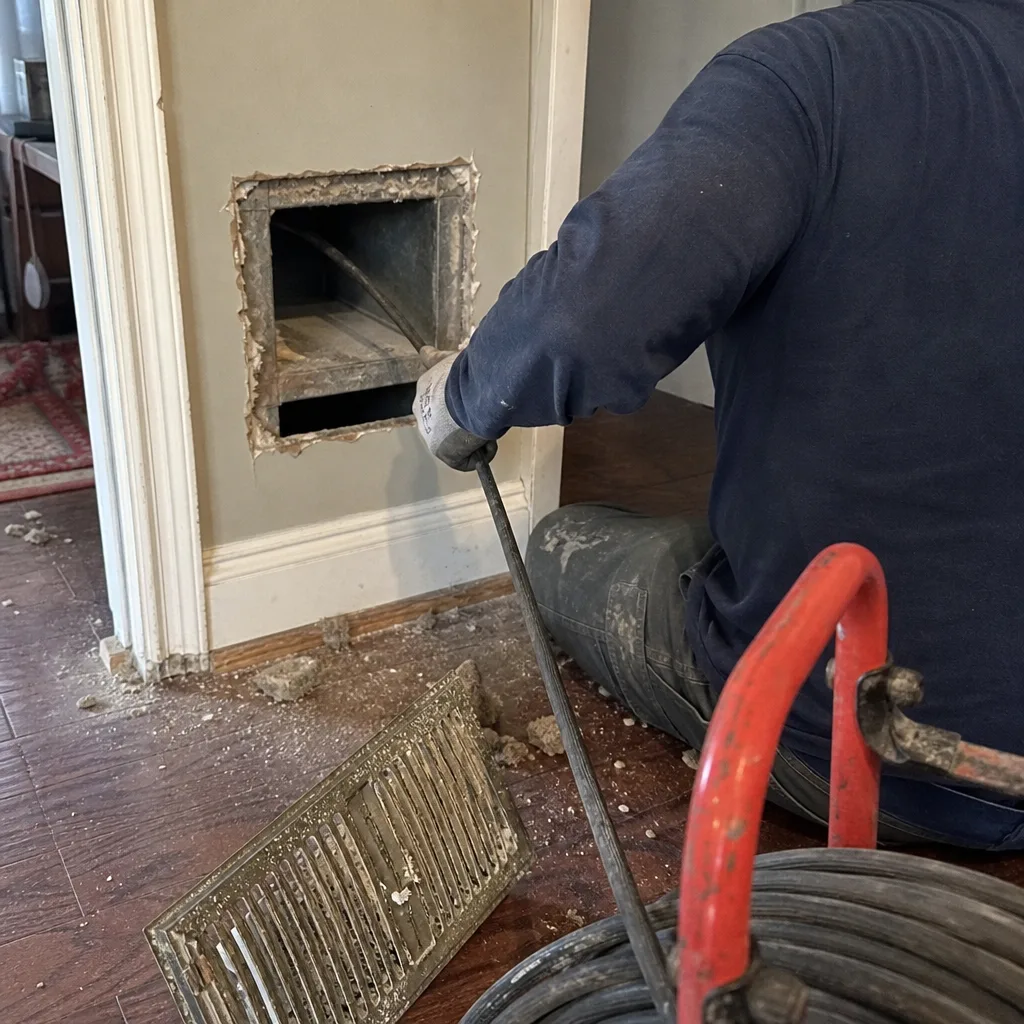
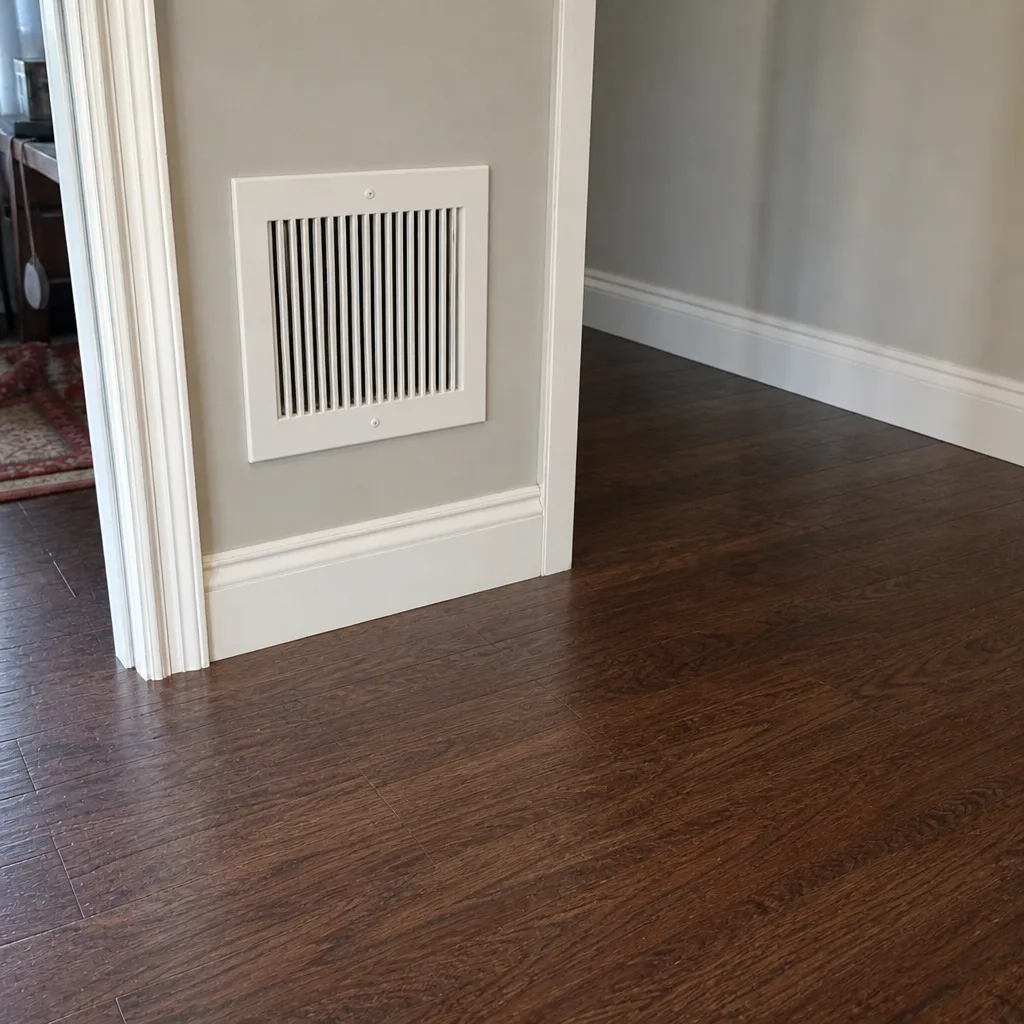
Whole-system duct and dryer vent check with before-and-after photos - you see exactly what came out of your vents
That "$99 whole-house special" is a bait ad - the real number appears once they are in your hallway, or the "clean" is a shop-vac at the register. We photograph the inside of your ducts before and after instead.
Air Duct Cleaning Cost Breakdown: The Long Island City Homeowner’s Reference for 2026
A $99 whole-house duct cleaning quote in Long Island City is not a deal. At that price point, the physics of proper negative-pressure source removal are impossible. What you’d be paying for is a shop vac pass-through that stirs up debris and leaves the source untouched. We’ve watched this market long enough to see pricing spread by a factor of four or five between operators for what sounds like the same job. This guide explains exactly what drives that spread, what a legitimate cost looks like for the building types you actually live in here, and how to spot a quote that’s too low to be real or too padded to be honest.
Quick Answer
Air duct cleaning in Long Island City typically runs $350 to $900 for a standard apartment system and $600 to $1,400 for a detached house or a larger condo with multiple zones. The written estimate sets the final price, and that estimate should reflect building type, system size, access difficulty, and whether you’re adding sanitizing or duct repair. There is no legitimate per-vent rate that gets you real source removal.
Styles & brands we work with
- Whole-home duct cleaning
- Dryer vent cleaning
- Camera inspection
- Sanitizing & deodorizing
Table of Contents
- Why Do Duct Cleaning Quotes in Long Island City Vary So Much?
- Per-Vent Pricing vs. Whole-System Pricing: Which Protects You?
- How Building Type Changes the Price in Long Island City
- What’s Inside a Professional Duct Cleaning Invoice
- Add-Ons Worth Paying For vs. Upsells That Rarely Are
- What Rotobrush and Nikro Actually Buy You
- From cleaning to sealing to sanitizing: Why One Contractor Matters
- How to Choose an Air Duct Cleaning Company in Long Island City
Why Do Duct Cleaning Quotes in Long Island City Vary So Much?
Two operators can quote the same three-bedroom condo and land $280 apart because they’re not selling the same thing. One is selling a vacuum pass; the other is selling debris removal plus containment plus documentation. The gap isn’t margin, it’s method.
The biggest driver is equipment. A consumer wet/dry vac pulling 150 CFM through a hose cannot evacuate a 6-inch trunk line once the brush has loosened the debris. A Nikro HEPA vacuum running negative pressure on the plenum keeps the whole system under containment, which is why professional jobs start there and only then begin agitation with a Rotobrush rotary brush. That sequence, containment first, brush second, vacuum third, is what separates a real clean from a re-distribution.
Second driver: access. Long Island City has a lot of building stock that wasn’t designed for service. Pre-war walkups around the Vernon Boulevard corridor often hide riser chases behind finished plaster. Newer towers along Jackson Avenue run plenum returns that give a technician almost no drop-down point. Each of those conditions adds labor time, and labor time is the single largest line item on a legitimate quote.
Third driver: what happens after the vacuum shuts off. A cheap operator leaves. A full-scope operator inspects with a camera, seals the leaky joints they found, treats the coil if it’s fouled, and hands you photos of your own ducts before and after. That documentation alone usually accounts for $75 to $150 of the difference between the low quote and the real one.
Per-Vent Pricing vs. Whole-System Pricing: Which Protects You?
Per-vent pricing protects the operator. Whole-system pricing protects you. That’s the short version.
When a company quotes $25 or $35 per vent, the incentive is to count fast, clean fast, and upsell hard once they’re inside. You’ll often see the “per-vent” price suddenly require an add-on “deep clean” or “sanitizing treatment” to actually work. The homeowner ends up paying the real price anyway, just in two invoices.
Whole-system pricing does the opposite. The operator has to look at your actual system, size it, and commit to a number. That number takes into account:
- Number of supply and return runs
- Trunk line diameter and length
- Whether the system is rigid duct, flex conversion, or a mix
- Access points available versus access points that need to be cut
- Whether a coil clean, blower pull, or plenum clean is part of the scope
- Sanitizing (antimicrobial fogging, an Aprilaire or Honeywell in-line product if requested)
- Post-job camera inspection and documentation
We’ve worked with homeowners in Long Island City who were quoted per-vent and ended up with a bigger bill than the whole-system quote they’d declined. The written estimate you get from a whole-system operator is the one that survives contact with reality. That’s why we don’t quote per vent, and we don’t recommend operators who do.
How Building Type Changes the Price in Long Island City
The single most useful thing you can do before collecting quotes is know what kind of duct system you have. Long Island City has three dominant building types, and each one prices differently.
Pre-War Apartments With Flex Duct Conversions
Older buildings around Hunters Point and the Court Square area were built before central air was a thing. Many have been retrofitted with flex duct runs added during renovations. Flex duct is cheaper to install and harder to clean. If the flex has collapsed or kinked inside a chase, agitation can’t reach the debris. A legitimate quote for flex conversion systems in Long Island City starts higher ($450 to $750 for a one-bedroom) because the technician has to work slowly, sometimes run the rotary brush at low speed to avoid damaging the liner, and may recommend partial duct replacement rather than clean, which falls under air duct cleaning scope discussions.
Newer Condos With Inaccessible Plenum Systems
Towers built more recently often use a central plenum return with branch supply runs. There’s no accessible trunk line, no easy way to reach the coil without cutting drywall, and the fan coil unit is usually in a closet. Cleaning is entirely feasible, but it takes a different approach. We open the plenum access, run the Nikro HEPA at the supply side, and work each branch individually. Pricing for these runs $400 to $700 for a one-bedroom and $700 to $1,200 for a two- or three-bedroom, depending on how many branches each zone has.
Detached Homes With Standard Rigid Duct
If you own a detached house in Long Island City, you likely have standard rigid galvanized duct in a basement or crawl space. That’s the easiest system to clean thoroughly, and pricing is the most predictable: $600 to $1,400 depending on system size and whether the coil needs a pull.
What’s Inside a Professional Duct Cleaning Invoice
A legitimate quote has five line items. A quote missing two of them is a quote for a different job.
- Equipment mobilization. Hooking up a HEPA vacuum, running negative pressure, staging the rotary brush and camera. Typically $75 to $150.
- Labor for source removal. Two technicians for two to five hours depending on system size. Usually the largest line item, $200 to $600.
- Sanitizing treatment. Antimicrobial fogging of the supply and return after cleaning. $75 to $200 depending on system size.
- Camera inspection. Before and after footage of your own ducts. $50 to $100.
- Documentation and report. Photo set, written summary, and (if applicable) recommendations for duct repair or sealing. $25 to $75.
That stack is what gets you from the $350 floor to the $900 ceiling for a standard apartment. If a quote comes in at $99 or $199, most of these lines didn’t make it onto the invoice, or the operator is planning to add them on-site once the vacuum is unpacked.
We also recommend HVAC cleaning be bundled into the same visit when the coil is fouled, because pulling a coil during a duct clean costs far less than scheduling a separate trip. That’s one of the genuine efficiencies of doing everything with one contractor.
Add-Ons Worth Paying For vs. Upsells That Rarely Are
Some add-ons are legitimate. Some are theater. Here’s how we’d rank them if it were our own apartment in Long Island City.
Worth It
- Coil cleaning. If your system is over ten years old and has never had a coil pull, the coil is almost certainly fouled. This is one of the highest-return add-ons you can buy, typically $150 to $350.
- Duct repair and sealing. Leaky joints are common in older Long Island City stock. Sealing them after cleaning prevents dust from re-entering through gaps. Usually $200 to $500 depending on how many joints need work.
- Sanitizing fog after source removal. The key is “after.” Sanitizing before the debris is gone just wets the dust. Done correctly, it’s worth the $75 to $200.
- Dryer vent cleaning. Separate from your HVAC ducts, but a critical fire-safety step that most duct-only companies skip. If your dryer vent cleaning hasn’t been done in years, bundle it.
Rarely Justified
- Air freshener injection. Masks odor. Doesn’t remove the source.
- Whole-house UV installation without a coil clean first. UV reduces microbial growth on the coil. A dirty coil defeats the lamp. Clean first, then install.
- “Enzyme treatments” on clean ducts. If the ducts are clean, there’s nothing to treat.
- Repeated sanitizing passes in the same visit. One is enough if the cleaning was done properly.
What Rotobrush and Nikro Actually Buy You
It buys you measurable outcomes. That’s the honest answer.
Rotobrush rotary-brush technology physically scrubs duct walls. It removes the biofilm layer that forms on the inside surface of supply runs, especially in humidified systems. A consumer vacuum pass doesn’t touch that layer. It sweeps the loose dust off the top and leaves the growth underneath.
Nikro HEPA vacuum equipment running negative pressure on the whole system means that while the brush is agitating, the vacuum is pulling the loosened material out of the return side. Containment is the whole point. Without it, debris that gets knocked loose by agitation simply re-settles somewhere else in the house, and often into the rooms you’re standing in.
The measurable difference shows up in a camera inspection. A cleaned-with-consumer-equipment duct looks different from a cleaned-with-pro-equipment duct in three visible ways:
- Surface texture on the interior of the duct (scrubbed vs. swept)
- The amount of residual material at the duct-to-register junction
- The condition of the coil and plenum, which is where the return air actually deposits debris
It also shows up in how long the clean lasts. Source-removed ducts stay clean longer. Surface-swept ducts regrow biofilm fast, especially in a humid coastal-adjacent climate like what Long Island City gets, where air conditioning runs hard from June through September and interior moisture loads stay elevated.
From cleaning to sealing to sanitizing: Why One Contractor Matters
Half the duct cleaning problems we see in Long Island City are really duct leakage problems that got sold as a cleaning problem. Loose joints at the plenum, disconnected flex collars in a closet, a return chase that’s pulling air from between the walls. No amount of cleaning fixes those. Sealing does.
That’s why our five service lines belong on one invoice: air duct cleaning, dryer vent cleaning, HVAC cleaning, duct repair and sealing, and air quality and sanitizing. When a technician is on-site, they can inspect, clean, seal a leak, pull a coil, sanitize, and clean the dryer vent before the vacuum ever gets packed up. That saves you mobilizing a second contractor for a problem the first one already found.
We also carry recognized air-quality brands on every job, including Honeywell and Abatement Technologies products, so if the assessment calls for a filtration upgrade or in-line sanitizing unit, we’re not guessing at part numbers from a catalog. Aprilaire humidification components work the same way: if the home needs them, they’re available during the same visit.
If any of this sounds like your situation, we’re happy to walk through it. Air Duct Cleaning Long Island City is our home page if you want the full picture of what we do.
How to Choose an Air Duct Cleaning Company in Long Island City
There are four questions that separate a real operator from a pass-through. Ask them on the phone before you book.
- “What equipment will be on the truck?” If they can’t name their vacuum platform or their agitation tool, that’s your answer. Rotobrush and Nikro are the standard names. So are Abatement Technologies and a handful of others. A generic “professional equipment” answer is a dodged question.
- “Will I get before and after photos of my own ducts?” Not stock photos, not a brochure. Your ducts, with a timestamp. If they can’t promise this, walk.
- “Is the quote whole-system or per-vent?” Whole-system is what you want. Per-vent invites the on-site upsell.
- “What happens if you find a leak?” A good answer involves repair and sealing as part of the same visit. A bad answer is “we don’t do that, call an HVAC contractor.”
A fifth question, which we recommend asking of anyone you’re considering: “Do you offer sanitizing, or just cleaning?” Sanitizing belongs in the standard service menu, not on a separate invoice.
Common Mistakes to Avoid
- Booking on a per-vent price. It always costs more by the time the technician leaves, because the “deep clean” is presented as an add-on once they’re on-site.
- Skipping the camera inspection. Without before-and-after photos of your own ducts, you have no way to know whether the cleaning actually happened. This matters more in Long Island City apartments than in houses, because you often can’t see the duct runs from any accessible point.
- Sanitizing before source removal. Fogging a dirty duct just dampens the dust. Insist on the order: clean, then sanitize.
- Ignoring the dryer vent while you’re at it. A duct visit is the easiest moment to include dryer vent cleaning. It’s also a fire-safety step, not just a cleaning step, and it’s often skipped by duct-only companies who don’t want to run the extra equipment.
- Assuming “duct cleaning” fixes poor airflow. Sometimes it does. Often the real problem is a leaking joint or a disconnected flex collar, which needs repair and sealing, not just cleaning. Get both on the estimate.
- Choosing the lowest quote without asking what the equipment is. A consumer-equipment operator isn’t doing the same job. You’re not comparing apples to apples, you’re comparing rotobrush-and-HEPA to a wet/dry vac.
- Repeating the clean every year on a system that didn’t need it. Ducts in a well-sealed system can go much longer between cleans. Ask for evidence of what’s in there, not a subscription.
See the difference
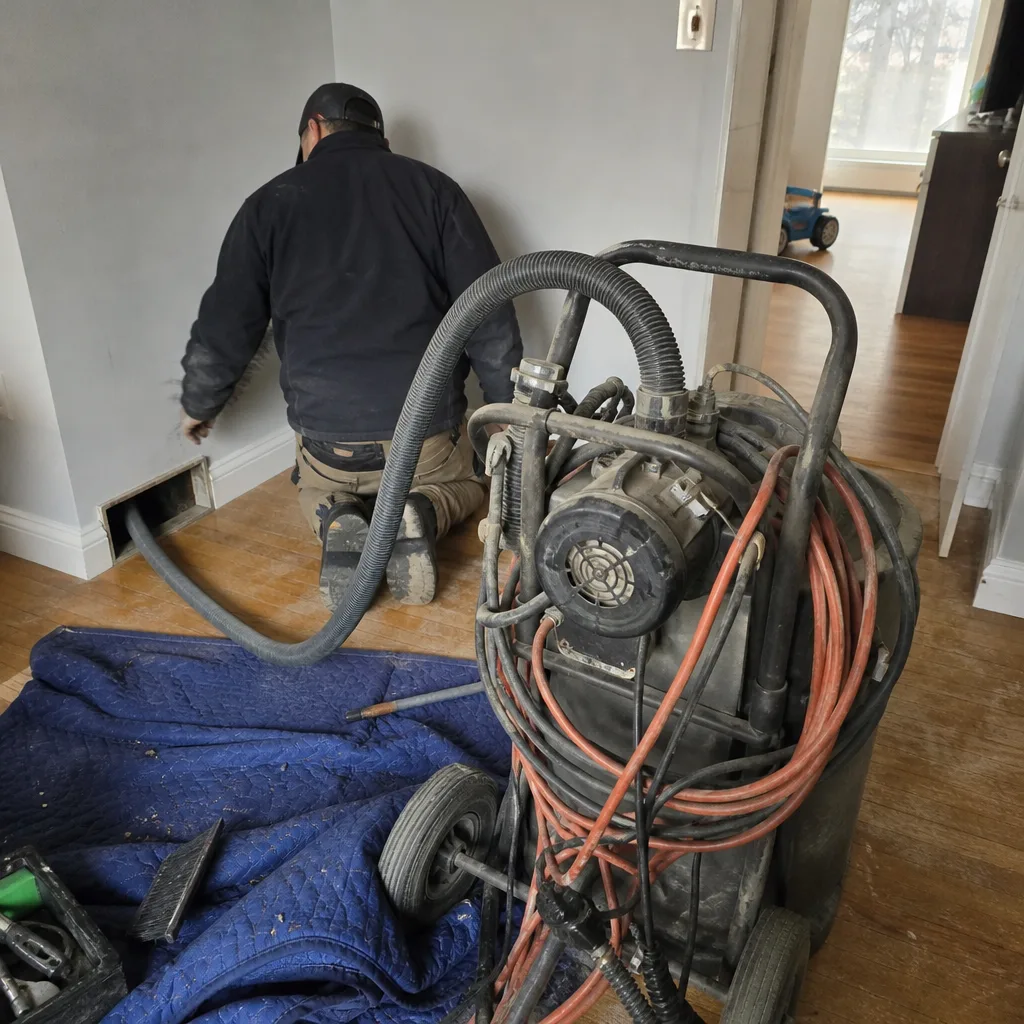 Before
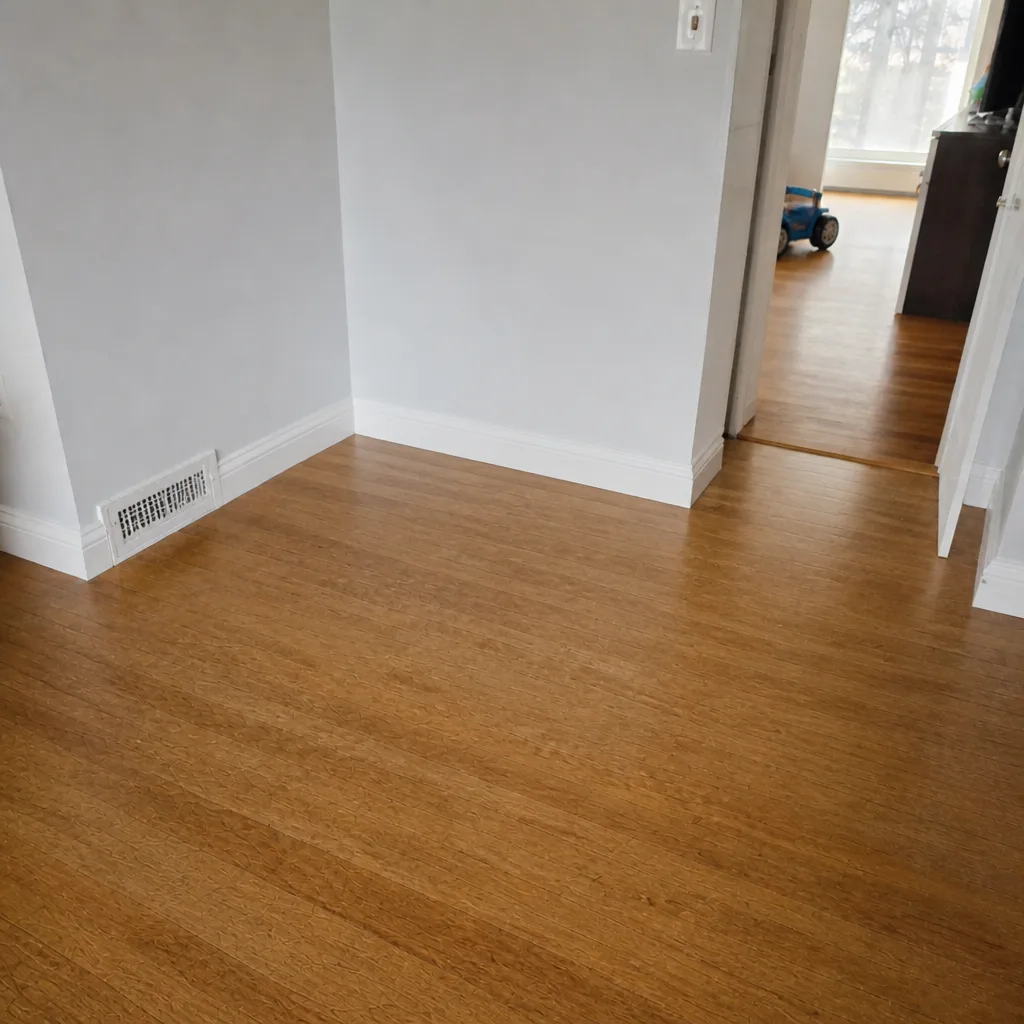 After
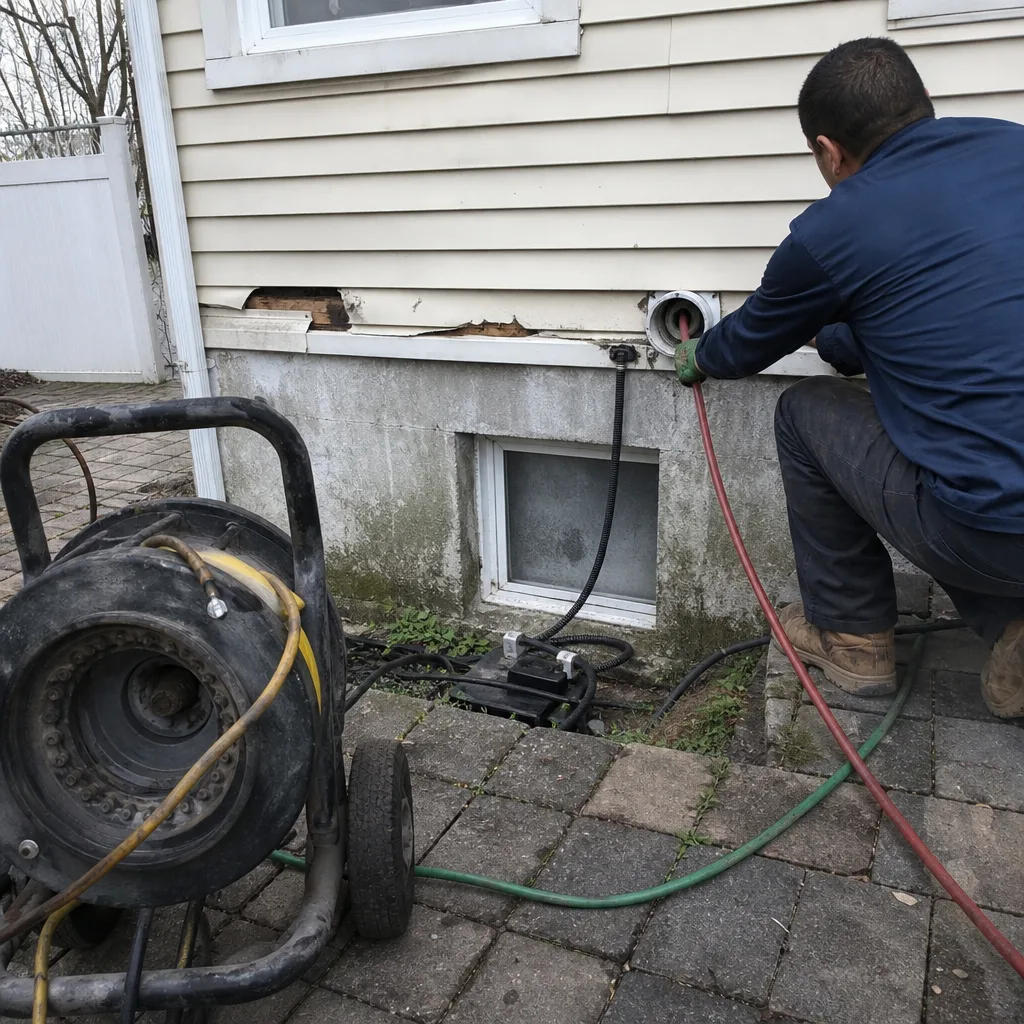 Before
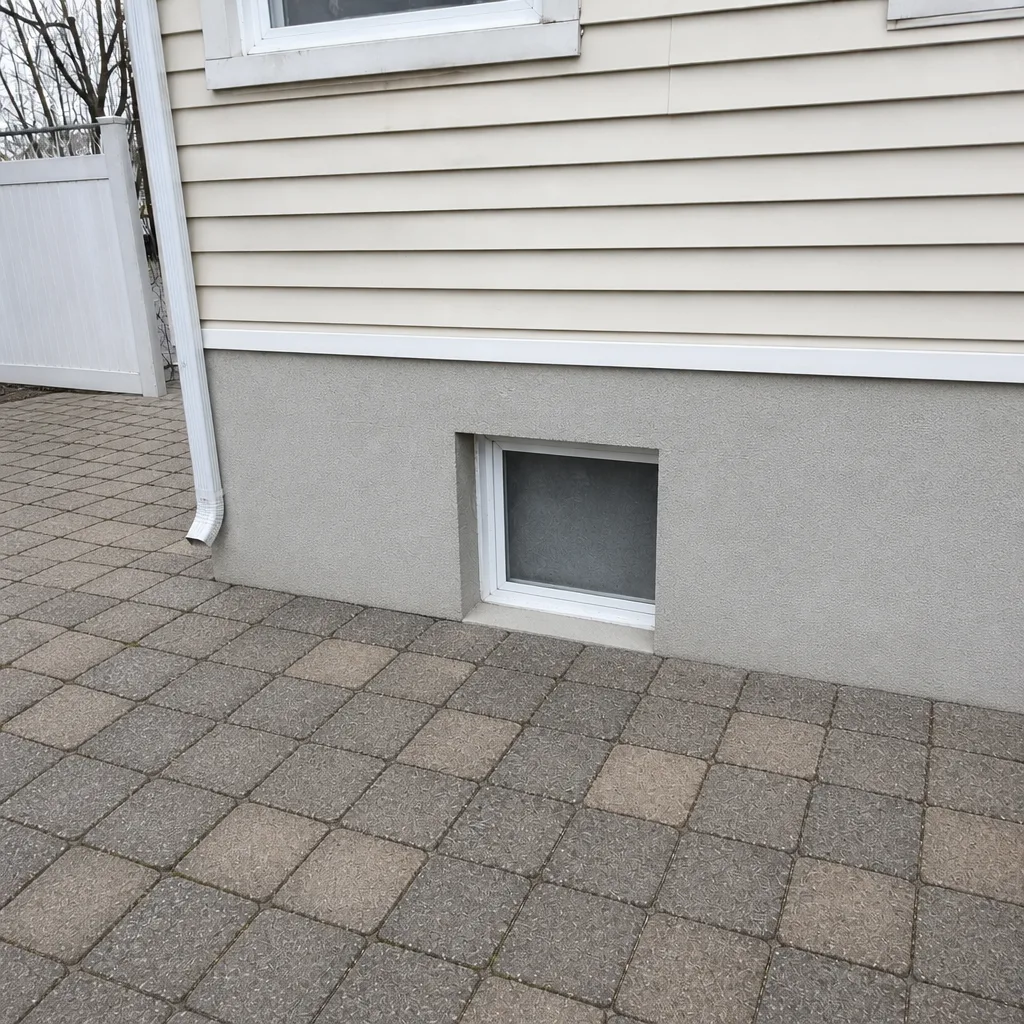 After
 Before
 After
When to Call a Professional
Call a professional if you’re noticing allergy symptoms that ease when you’re away from home, if there’s a musty odor coming from the supply registers, if the airflow is uneven between rooms, or if you can’t remember the last time the ducts were serviced. Long Island City homeowners we talk to usually fall into one of those four buckets. Call a professional before you try to fix any of it with a shop vac, because agitation without containment makes the problem worse. If you’re noticing the coil is fouled or the blower is caked with dust, get HVAC cleaning on the same visit. Air Duct Cleaning Long Island City offers free estimates in Long Island City. Call (833) 918-5344. We answer 24/7. Fast dispatch from 7am to 7pm, Sunday through Friday.
Frequently Asked Questions
Typical whole-system pricing runs $350 to $900 for a standard apartment and $600 to $1,400 for a detached house or larger condo. The written estimate sets the final price after the technician has assessed your system, access, and whether sanitizing or duct repair is part of the scope. Call (833) 918-5344 for an exact quote; estimates are free.
Cheap quotes are almost always consumer-equipment jobs dressed up as professional cleans. A $99 or $199 quote can’t fund the mobilization of a Rotobrush and a Nikro HEPA vacuum, the labor hours for source removal, and a post-clean camera inspection. It funds a vacuum pass with a shop vac. The debris you’re paying to remove was never mechanically agitated off the duct wall, so it’s still there. Call (833) 918-5344 if you want a quote built on method.
Before-and-after photos of your own ducts, taken by the technician during the visit, with a timestamp. That’s the only proof that means anything. A company that offers photos and a written report is telling you their work is verifiable. If they can’t produce them, they didn’t do the job you paid for. Estimates are free; call (833) 918-5344 to book one.
Most homes don’t need annual duct cleaning. In a Long Island City apartment that has been recently cleaned and has a sealed system, two to five years between service visits is realistic. Detached houses with pets, recent renovation dust, or a hose-drawn return line often benefit from more frequent attention. The right answer depends on what your camera inspection shows.
Yes, materially. Pre-war apartments with flex duct conversions price higher than detached homes with rigid duct because flex is harder to clean without damaging the liner. Newer condo towers with inaccessible plenums sit in the middle: the work is straightforward but requires different access. A whole-system quote should reflect which category your building falls into, not a flat per-vent rate. Call (833) 918-5344 to discuss your building.
They do two different jobs on the same visit. Rotobrush is the rotary-brush agitation system that mechanically scrubs debris and biofilm off the interior duct wall. Nikro is the HEPA-vacuum platform that runs negative pressure on the whole system, pulling the loosened material out under containment. One cleans, the other contains. You need both to get a real source-removal outcome. Estimates are free. Call (833) 918-5344.
The Bottom Line
Air duct cleaning pricing in Long Island City comes down to five things: equipment, access, labor, scope, and documentation. If a quote is missing two of those, it’s not the same job. A whole-system estimate from an operator who names their equipment, promises before-and-after photos, and includes sanitizing in the standard menu is the one to trust. A per-vent quote at $99 is not a discount, it’s a different service. Our technicians have up to 9 years of experience on systems like yours, and we’re happy to walk through your actual duct situation before you decide anything.
Contact
If you’re ready to know what your ducts actually need, call Air Duct Cleaning Long Island City at (833) 918-5344 for a free estimate. We answer 24/7. Fast dispatch from 7am to 7pm, Sunday through Friday. One flat price per system, agreed before work starts, with before-and-after photos of your own ducts. The local pro we connect you with is licensed and insured as their state requires. From cleaning to sealing to sanitizing, we don’t just remove debris, we help restore the system.
Written by the team at Air Duct Cleaning Long Island City.