
Last updated November 22, 2026
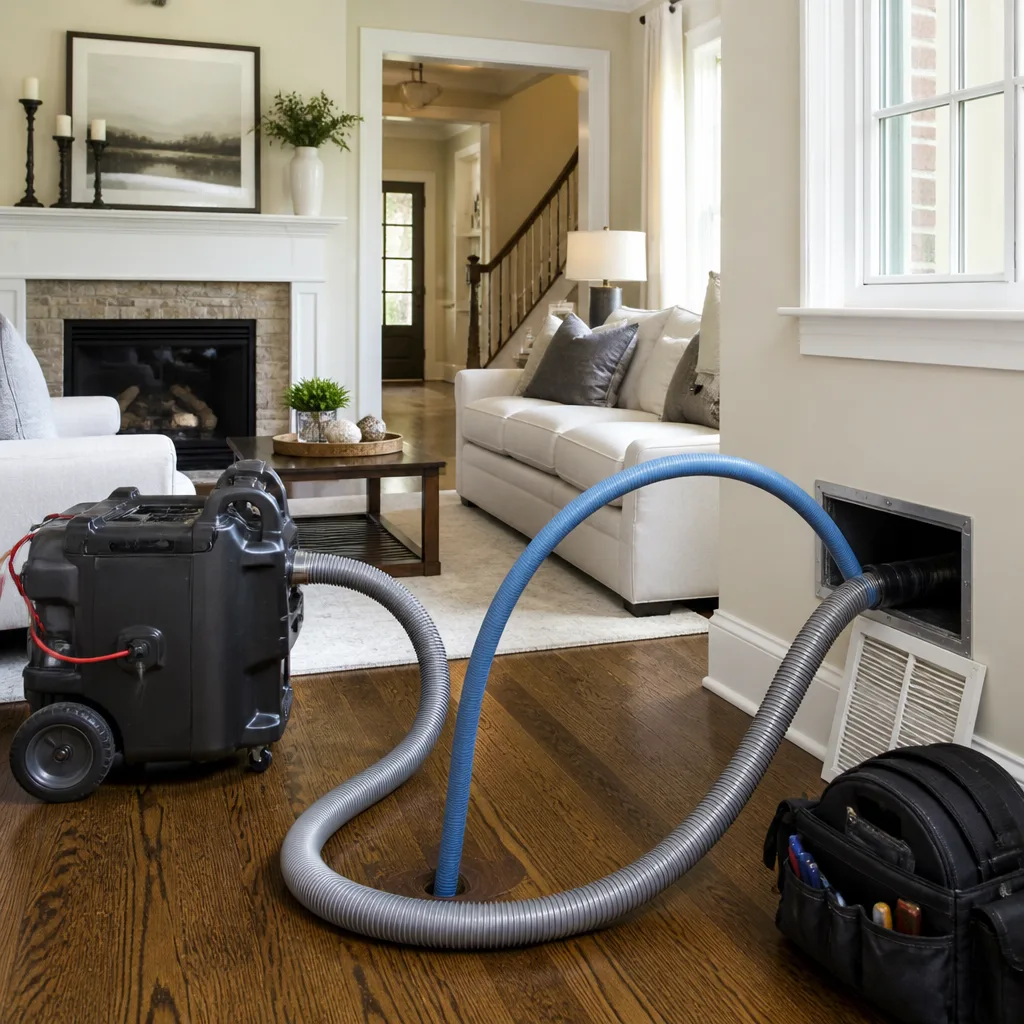 Whole-home duct cleaning
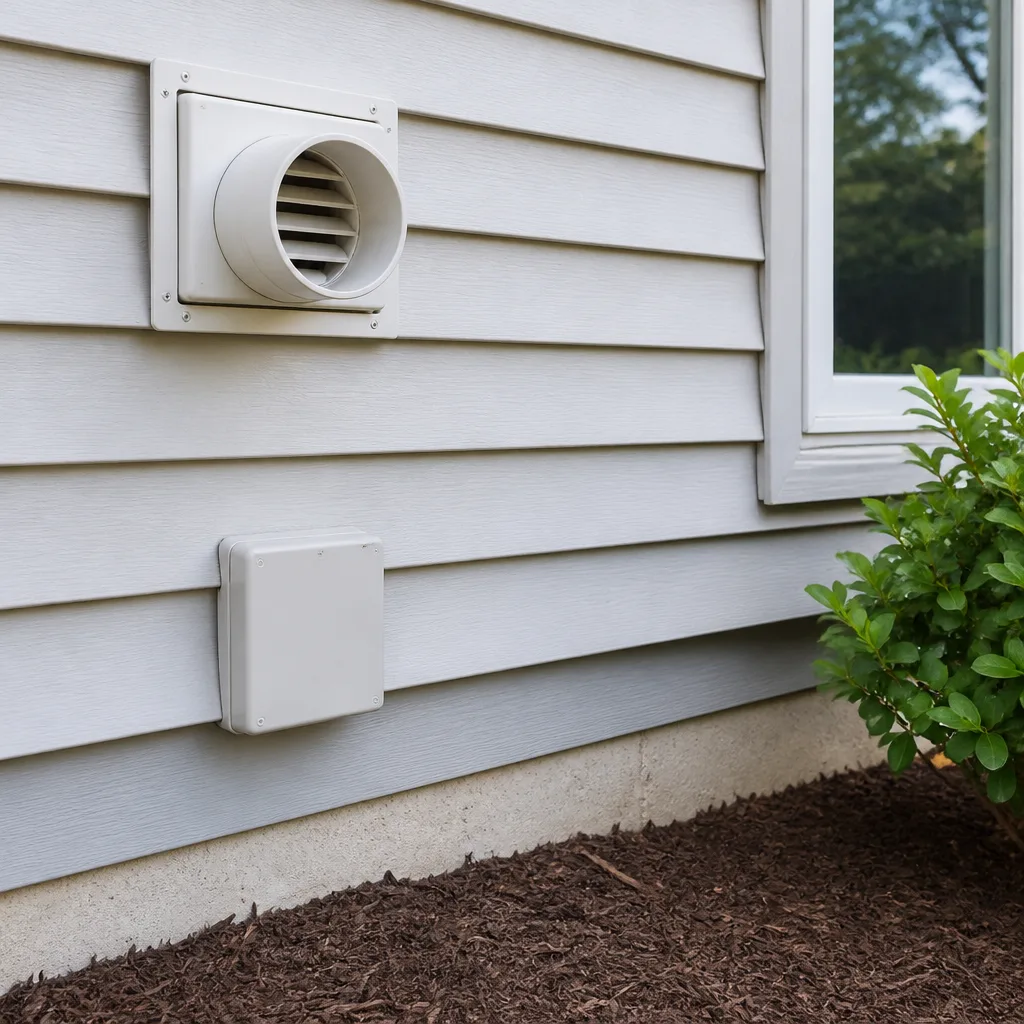 Dryer vent cleaning
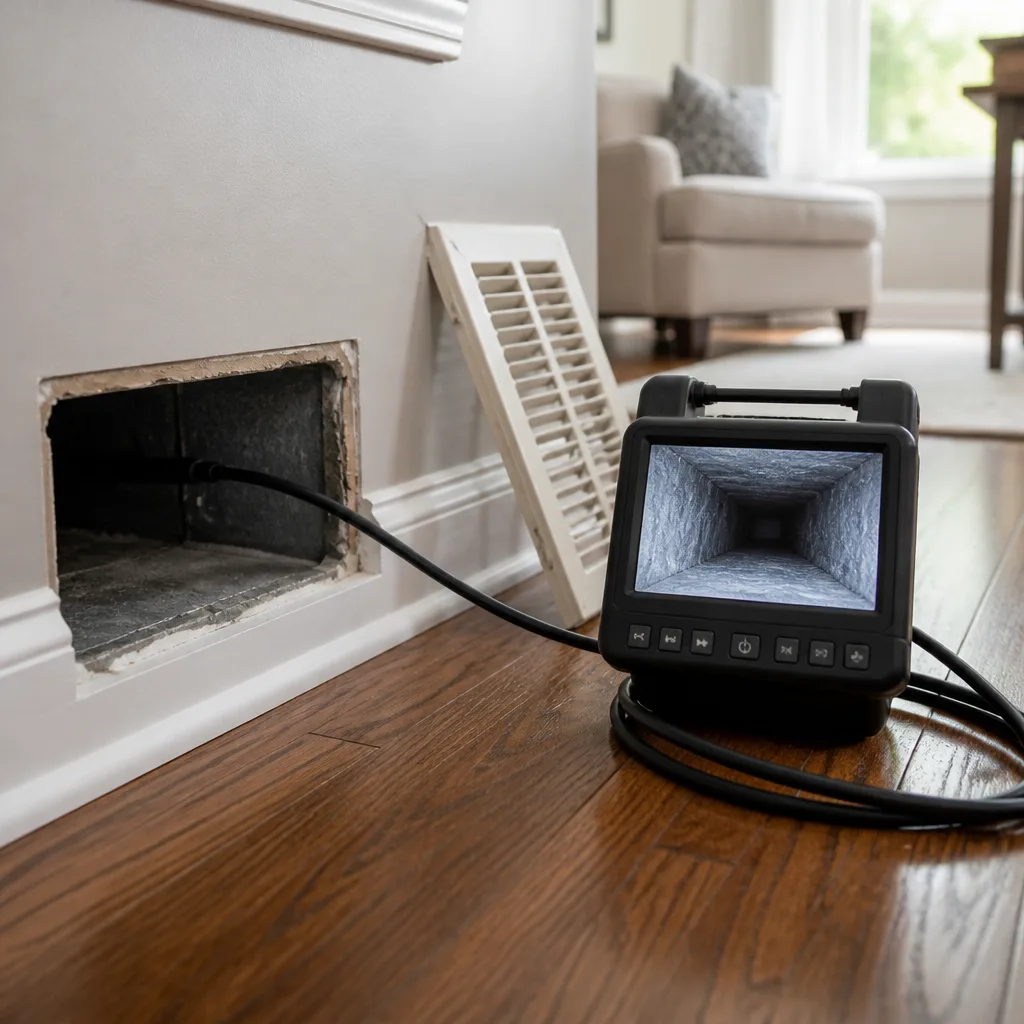 Camera inspection
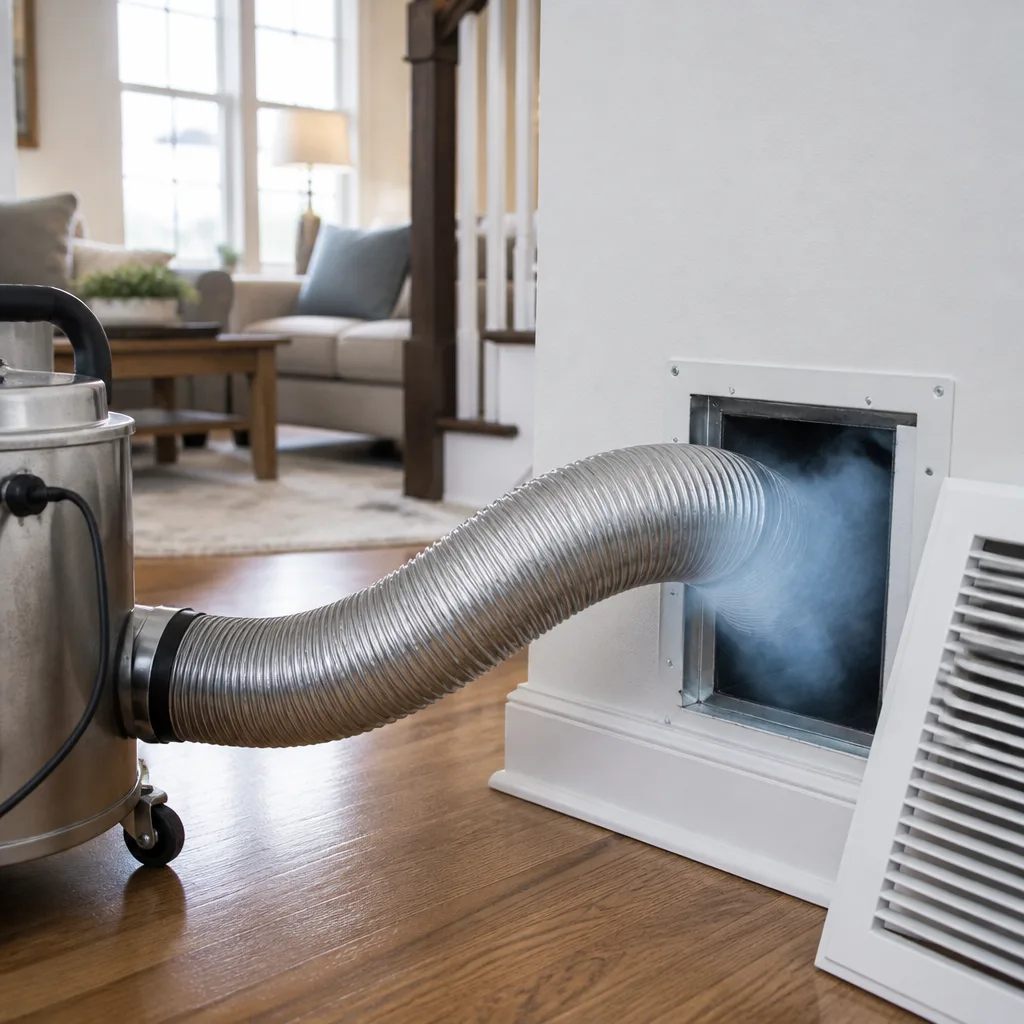 Sanitizing & deodorizing
Whole-system duct and dryer vent check with before-and-after photos - you see exactly what came out of your vents
That "$99 whole-house special" is a bait ad - the real number appears once they are in your hallway, or the "clean" is a shop-vac at the register. We photograph the inside of your ducts before and after instead.
How to Hire an Air Duct Cleaning Contractor in Long Island City: A Step-by-Step Guide
In New York State, anyone can legally show up with a vacuum and a business card and call themselves an air duct cleaner. There is no trade license required for this work, which makes contractor vetting the single most important step in the entire process. That catches most Long Island City homeowners off guard. They assume the state has already done the checking. It hasn’t. What separates a legitimate indoor air quality professional from a trunk-and-blower operation running a consumer shop vac comes down to a short list of questions you can ask before you book anything, and a handful of contract terms you should never sign without. This guide walks through those questions one at a time so you know exactly what a real answer sounds like.
Quick Answer
Hire an air duct cleaning contractor in Long Island City by interviewing before you book: ask what negative-pressure system they use, whether they can name the CFM rating of their vacuum unit, what certifications their technicians hold, and whether they provide written post-job documentation and camera footage. Require a pre-job walkthrough, a written scope of work, and before-and-after evidence of your own ducts. Anyone who resists those steps is telling you something useful before they ever reach your door.
Styles & brands we work with
- Whole-home duct cleaning
- Dryer vent cleaning
- Camera inspection
- Sanitizing & deodorizing
Table of Contents
- Why There’s No License Requirement, and What That Means for You
- The Five Technical Questions to Ask Before You Book
- What Real Certifications Look Like (and What’s Just a Badge)
- Red Flags Specific to Low-Bid Operators
- How to Evaluate Before-and-After Photos and Camera Footage
- Contract Terms That Protect You
- What a Proper Air Duct Cleaning Job in Long Island City Involves
- The Equipment Difference: Professional Systems vs. Consumer Vacuums
- Common Mistakes to Avoid
- When to Call a Professional
- Frequently Asked Questions
- The Bottom Line
Why There’s No License Requirement, and What That Means for You
New York does not issue a license for air duct cleaning. There is no state exam, no apprentice hours, no continuing education requirement to renew. A general contractor handling ductwork as part of a larger HVAC project may operate under a home improvement license in some contexts, but the person who arrives to clean your ducts as a standalone service often holds nothing. This is the plain regulatory reality, and it’s the reason vetting falls entirely on you.
In a dense neighborhood like Long Island City, that reality has a specific edge. The housing stock is a mix of new high-rise construction with tight, engineered ductwork and older low-rise buildings where systems have been modified, patched, and rerouted more than once. A contractor who’s only ever run a vacuum through a simple ranch house duct run doesn’t know what to do with a high-rise system that fans out across a dozen zones. When a contractor’s work goes wrong in a building like that, you’re the one who eats the cost, because there’s no licensing board to file a complaint with.
What you can do instead:
- Verify the business entity. Ask for the legal business name and check it in the New York State Department of State database. A company that won’t give you a legal name is a company you should not invite in.
- Ask for a certificate of insurance before the appointment. The local professional is licensed and insured as their state requires, and a legitimate outfit has that document ready in minutes.
- Confirm a physical business address and a working phone number you can call back. Anyone reachable only through a web form or a temporary cell number is a risk.
- Get the scope in writing before anyone touches a duct. More on that below, but it starts here.
The upside of a market with no licensing floor is that the good operators stand out fast once you start asking technical questions. The bad ones can’t keep up the conversation.
The Five Technical Questions to Ask Before You Book
These are the questions a trained technician answers without hesitation. If the person on the phone has to go check, or deflects into a sales pitch about their low price, you’ve learned what you need to know. Write these down and ask them in order.
- What negative-pressure system do you use? Proper air duct cleaning depends on sealing the system and pulling the whole run into negative pressure so loosened debris travels out rather than into your living room. A HEPA-rated negative-pressure setup with containment is the standard. If they don’t know what negative pressure means, they’re vacuuming a vent, not cleaning a system.
- Can you name the CFM rating of your vacuum unit? CFM is cubic feet per minute, a measure of airflow. A professional system moves serious volume; a consumer shop vac doesn’t come close. A technician who knows their equipment can tell you the rating. This is one of the fastest ways to separate a professional-grade machine from a hardware-store vacuum in a van.
- What method do you use to agitate the duct walls? Debris settles and clings. Professional crews use rotary brushes or compressed-air whips to break it loose before extraction. Ask which system. Companies using Rotobrush or Nikro equipment will name their platform right away, because they know the difference matters.
- Do you clean the whole system or just the supply runs? A real job covers supply ducts, return ducts, registers, and the components inside your air handler that the air passes through. Ask explicitly. “We clean all the vents” is not a scope of work.
- What documentation do you provide when you’re finished? A professional provides written post-job documentation: what was cleaned, what equipment was used, and visual evidence. Camera footage of the duct interiors before and after is the gold standard. If they won’t provide it, don’t book.
If you’re comparing a quote against a full indoor air quality scope that includes sealing leaks or sanitizing, you’ll also want to ask about those services separately. A contractor who can only clean is a different animal from one who can clean the HVAC system and address the reason debris is accumulating in the first place.
What Real Certifications Look Like (and What’s Just a Badge)
Certifications don’t replace a license, because there is no license. They’re a signal of voluntary professional commitment, and they’re worth understanding before someone waves one at you.
NADCA membership is the one most often cited. The National Air Duct Cleaners Association publishes standards for how this work should be performed and offers an Air Systems Cleaning Specialist (ASCS) credential for technicians who pass an exam on the standards. That credential means a technician has studied the accepted approach to the work. It’s a real marker, though it is a professional association’s certification, not a government one. If a company claims NADCA membership, ask whether the technicians doing the job on your Long Island City property actually hold the ASCS credential or whether only the front office is a member. Those are different things.
What’s just a badge: a logo on a website with no explanation, a “certified” sticker on a van with no name attached, a claim of “Trained Technicians” with no program named. Some companies display association logos for groups they’ve never joined. Ask a direct question: “Who issued that certification, and can I look it up?” A real one has an answer in a sentence. A decorative one gets you a sales pitch instead.
Regardless of what certifications any contractor claims, our own technicians have up to 9 years of experience, and we’d rather you evaluate that skill directly than take a logo at face value. That’s true of any company you interview. The certifications are a starting signal. The answers to your five questions are the real test.
One more point: because indoor air quality work spills into areas like sanitizing and moisture control, a company that can name the products it uses for that part of the job is worth more than one that can’t. Honeywell, Aprilaire, and Abatement Technologies equipment comes up routinely in serious IAQ work, and a technician who can explain why and when each is appropriate knows their field.
Red Flags Specific to Low-Bid Operators
Price-driven duct cleaning has its own signature. Once you know what to look for, it stands out immediately.
- A vague scope of work. “Full air duct cleaning” on a one-line invoice means nothing. A legitimate scope lists the specific components being cleaned: supply runs, returns, registers, the air handler, and any accessible connections. If you can’t tell from the quote what’s actually happening, that’s the first red flag.
- No pre-job walkthrough. A professional walks your property with you and points out what they see before anything starts. In Long Island City buildings especially, where ductwork runs behind finished walls and in shared risers, that walkthrough is where the contractor identifies access points and any surprises. A crew that arrives and starts working without that step is skipping the diagnosis.
- Refusal to provide written post-job documentation. If a company won’t tell you in writing what they cleaned and won’t show you any evidence, the burden of proof is on you to check, and you probably can’t. That’s the point.
- Group pricing on the phone with no property details asked. A quote given in thirty seconds without a single question about your unit’s size, number of systems, or ductwork is a guess. Real pricing depends on the property.
- Heavy upselling after arrival. Bait-and-switch usually works like this: a low opening figure quoted over the phone, then a much larger invoice after the technician is inside the unit. One flat price per system agreed before work starts is the structure legitimate operators use. Anything else is a warning.
- No phone number with a human on the other end. This matters more in a market with no licensing oversight. A voicemail box and a web form don’t identify anyone.
If a contractor can’t answer these red flag questions plainly, don’t book. There’s another company in Long Island City you can call instead, and there’s no shortage of them.
How to Evaluate Before-and-After Photos and Camera Footage
Before-and-after photos are useful, but they’re also easy to fake. Camera footage is what separates real evidence from marketing material. Here’s how to weigh what you’re shown.
Before-and-after photos: ask that they be of your system, not a stock set from a website. If a contractor can’t produce photos of your ducts specifically, you haven’t seen anything. A photo taken of a duct interior in your own Long Island City unit is evidence; a glossy stock photo of a pristine duct is decoration.
Camera inspection footage: this is the only evidence worth trusting in a dispute. A fiber-optic or push-rod camera fed into the ductwork shows the actual interior before cleaning and again after. When a contractor runs a camera through your ducts and shows you the footage, they’re demonstrating that they can see into the parts of the system you can’t. Before-and-after footage of the same run gives you verifiable proof that work was actually performed.
What to look for in the footage:
- Both the before and after clips should show the same section of duct from the same angle. That’s how you confirm it’s the same location.
- Duct openings after cleaning should be free of visible debris buildup on the walls. A light dust film is normal; heavy clumps aren’t.
- If you’ve been told sealing or repair work was performed, the footage should show the sealed joints or repaired sections.
If a contractor provides no camera footage and no photos of your own system, ask how you’re meant to confirm the work was done. The answer they give you tells you a lot.
Contract Terms That Protect You
A good contract on a duct cleaning job fits on a page. It doesn’t need to be complicated to be protective. What it needs is specificity. Here’s what to hold out for before you sign.
A defined scope. The contract should list every component being cleaned, the equipment being used, and the number of systems or zones. “Air duct cleaning” alone is not a scope. In a Long Island City property with more than one system, ask that each system be listed separately.
One flat price per system, agreed before work starts. Not a per-vent price, not a base rate plus so much per register, not a starting figure that can grow once they’re on site. A flat price for each system gives you a number you can plan around. Ask any contractor you’re interviewing how they price the job and write that answer into the contract.
Contingency language for mid-job discoveries. A real job sometimes turns up problems: disconnected ducts, mold growth in a wet section, or, in older buildings, materials that could contain asbestos. The contract should say what happens then. Specifically, it should state that work stops, you’re notified, and no additional work is performed or billed without your written approval. Never sign a contract that lets the contractor decide on their own to add work and charge for it.
A warranty on the work. Ask what happens if a duct connection is knocked loose or a register is damaged during cleaning. A responsible contractor carries insurance and stands behind the work. Get the warranty terms in writing, no matter how brief.
A clear cancellation and rescheduling policy. Fair terms on both sides protect you if something changes on your end.
Also worth knowing: dryer vent cleaning is often bundled with duct cleaning because the two jobs share a lot of the same equipment. If you want it added, get it on the same scope document and the same flat price, not as a surprise line item later.
What a Proper Air Duct Cleaning Job in Long Island City Involves
A real job follows a sequence. The better contractors run through it consistently, whether they’re working in a Hunters Point high-rise, a converted loft in Long Island City’s industrial edges, or a mid-rise in Dutch Kills. Here’s what a step-by-step professional job looks like.
- Pre-job walkthrough and inspection. The contractor walks the property with you, identifies every system and access point, runs a camera through accessible ductwork, and documents what’s there.
- Written scope of work and pricing. Scope and price are agreed in writing before any equipment is set up.
- Negative-pressure setup. The system is sealed at registers and connected to a HEPA-rated negative-pressure unit. This is what keeps loosened debris from blowing back into your living space.
- Mechanical agitation. Rotary brushes or air whips travel the length of each run, breaking debris off the duct walls. The negative-pressure system pulls it out.
- Component cleaning. The air handler, blower, and coils are cleaned where accessible. Debris that accumulates on a blower is often the source of the noise and reduced airflow people have been noticing.
- Sanitizing, if specified. Where mold or microbial growth is a concern, an antimicrobial treatment follows the cleaning. This only makes sense after the physical debris is removed, never in place of it.
- Post-job camera inspection. The contractor runs the camera again and documents what they find. You should see the footage.
- Written documentation and cleanup. A written report of what was cleaned, plus the before-and-after evidence, and a clean workspace when they leave.
If any of these steps are missing from what a contractor describes, ask why. Usually the answer will be that they don’t have the equipment to do that step.
The Equipment Difference: Professional Systems vs. Consumer Vacuums
Most of the disagreement in this market comes down to equipment. You can run a consumer shop vac through a register and pull out enough debris to make a photo look dramatic. What you can’t do is clean an entire duct system with it. The volume of airflow and the containment are wrong for the job.
Professional-grade duct cleaning relies on two things working together. First, high-volume negative-pressure extraction with HEPA filtration. Second, mechanical agitation that breaks debris loose from the duct walls. The extraction and the agitation have to match. Pulling too little air leaves debris behind; agitating too aggressively without containment spreads it into the space.
Two platforms come up consistently in this field:
- Rotobrush rotary-brush systems combine agitation and extraction in one unit that travels the length of the duct. It’s a well-recognized platform because it handles both supply and return runs well.
- Nikro negative-pressure HEPA vacuum units are the industry standard for the extraction side. When a contractor who knows their equipment names Nikro, they’re telling you they’ve invested in the right machine for containment.
The same logic applies to air quality products. Honeywell and Aprilaire are common in residential filtration and humidification systems, and Abatement Technologies equipment shows up in containment and air scrubbing work. None of these matter if a contractor is showing up with a shop vac and a bucket. Ask what equipment is coming into your unit before you book, and expect a specific answer. Cleaner air starts with equipment that can actually move the air.
Common Mistakes to Avoid
- Booking based on the phone quote alone. Two sentences on the phone isn’t a quote, it’s a hook. Ask for a written scope and flat price per system before you commit, because in a market without a licensing board, that document is your only protection.
- Associating “certified” with licensed. In New York, there is no license for this work. Certifications like NADCA membership and the ASCS credential are worth checking, but they’re a professional association’s mark, not a state one, and a website badge means nothing if the technician doing the work isn’t the one certified.
- Accepting “all vents cleaned” as a scope. In Long Island City buildings with multiple systems, “all vents” doesn’t say which runs, returns, or components inside the air handler are being cleaned. Get each system and component named in writing.
- Skipping the pre-job walkthrough. This is especially costly in a converted loft or older building where the ductwork has been modified. The walkthrough is how both parties agree on what’s being cleaned and what they’re looking at.
- Accepting photos from a website instead of your own system. Ask for before-and-after camera footage of your own ducts. It’s the only evidence worth trusting in a dispute.
- Treating cleaning as a cure-all. If the real problem is disconnected ducts, a leaky joint at a register, or a blower motor caked in debris, cleaning alone doesn’t fix it. Look for a company that can also do duct repair and sealing or address the HVAC side, not just one that scrubs and leaves.
- Skipping the contract contingency clause. If a contractor can add work and billing without your written approval when they find mold or damaged ductwork, you’ve signed away your leverage. Get that clause in writing on the contract before you sign.
When to Call a Professional
The best time to call a professional is before a small issue becomes an HVAC problem. Call an air duct cleaning contractor when you notice musty odors that don’t clear after the weather changes, when airflow is uneven from room to room despite a filter change, when allergy symptoms flare up indoors, or when you can see debris falling from a register. Call if the ducts haven’t been serviced in years, if you’ve just moved into a Long Island City unit with unknown service history, or if you’re planning a larger HVAC job and want the ductwork cleaned while the system is open. For the steps above, a written scope and camera documentation matter most, and Air Duct Cleaning Long Island City offers free estimates in Long Island City. Call (833) 918-5344. We answer 24/7. Fast dispatch from 7am to 7pm, Sunday through Friday.
Frequently Asked Questions
No. New York State does not issue a trade license for air duct cleaning, so there is no license to hire or verify. That means vetting is entirely on you: confirm the legal business name, ask for a certificate of insurance, and interview the contractor using the technical questions in this guide before you book, because there is no state board to file a complaint with if something goes wrong.
A legitimate contractor provides a written scope of work, a flat price per system agreed in advance, a pre-job walkthrough, and camera evidence of your own ducts after the job. A low-bid operator skips the walkthrough, quotes a number before asking about your property, adds charges after arrival, and offers no written documentation. The gap is usually visible in five minutes of conversation. Call (833) 918-5344 for an exact quote on your property; estimates are free.
Almost never, because the lowest quoted price is a starting figure, not a scope. The industry’s bait-and-switch reputation comes from exactly this: a low coupon figure that becomes a much larger invoice once the technician is inside your unit. Ask for one flat price per system, agree on it in writing before work starts, and require before-and-after camera footage of your own ducts. That structure protects you from a surprise invoice regardless of who you hire.
Camera inspection footage of your own ductwork before and after the job, paired with written post-job documentation. That’s the standard. If a contractor can’t show you footage of your ducts and won’t hand you a written report, you have no way to verify the work was performed. Ask what documentation they’ll supply before you book, and don’t accept website photos as a substitute. Call (833) 918-5344 to schedule a walkthrough; our estimates are free.
NADCA membership and the Air Systems Cleaning Specialist (ASCS) credential are worth verifying, because they indicate the technician has studied the association’s standards for this work. Confirm whether the technicians actually doing the job hold the credential, not just the front office. Everything else is a badge until you can look it up, and no certification substitutes for asking the five technical questions about negative-pressure equipment and agitation methods.
A defined scope of every component being cleaned, a flat price per system agreed in advance, contingency language for mid-job discoveries like mold or damaged ductwork that requires your written approval for added work, warranty terms on the finished job, and a clear cancellation policy. If the contract doesn’t name the specific components or doesn’t say what happens if a problem is discovered mid-job, don’t sign it. Call (833) 918-5344 to get a written scope for your Long Island City property.
The Bottom Line
New York doesn’t license air duct cleaners, which means the only thing standing between you and a bad job is your own vetting. Ask the five technical questions about negative-pressure equipment, agitation method, and documentation. Verify the certifications rather than trusting a logo. Walk the property with the contractor before anything starts, get a written scope and one flat price per system, and require camera footage of your own ducts before and after. Refuse the contract that lets work be added without your written approval. Everything above is a test you can administer in a short phone call and a walkthrough, and a contractor worth hiring will welcome it.
If you’re ready to put these questions to work, Air Duct Cleaning Long Island City offers free estimates in Long Island City. Call (833) 918-5344. We answer 24/7. Fast dispatch from 7am to 7pm, Sunday through Friday. For our full scope of services, start with Air Duct Cleaning Long Island City so you know what a complete job covers.
Written by the team at Air Duct Cleaning Long Island City.
See the difference
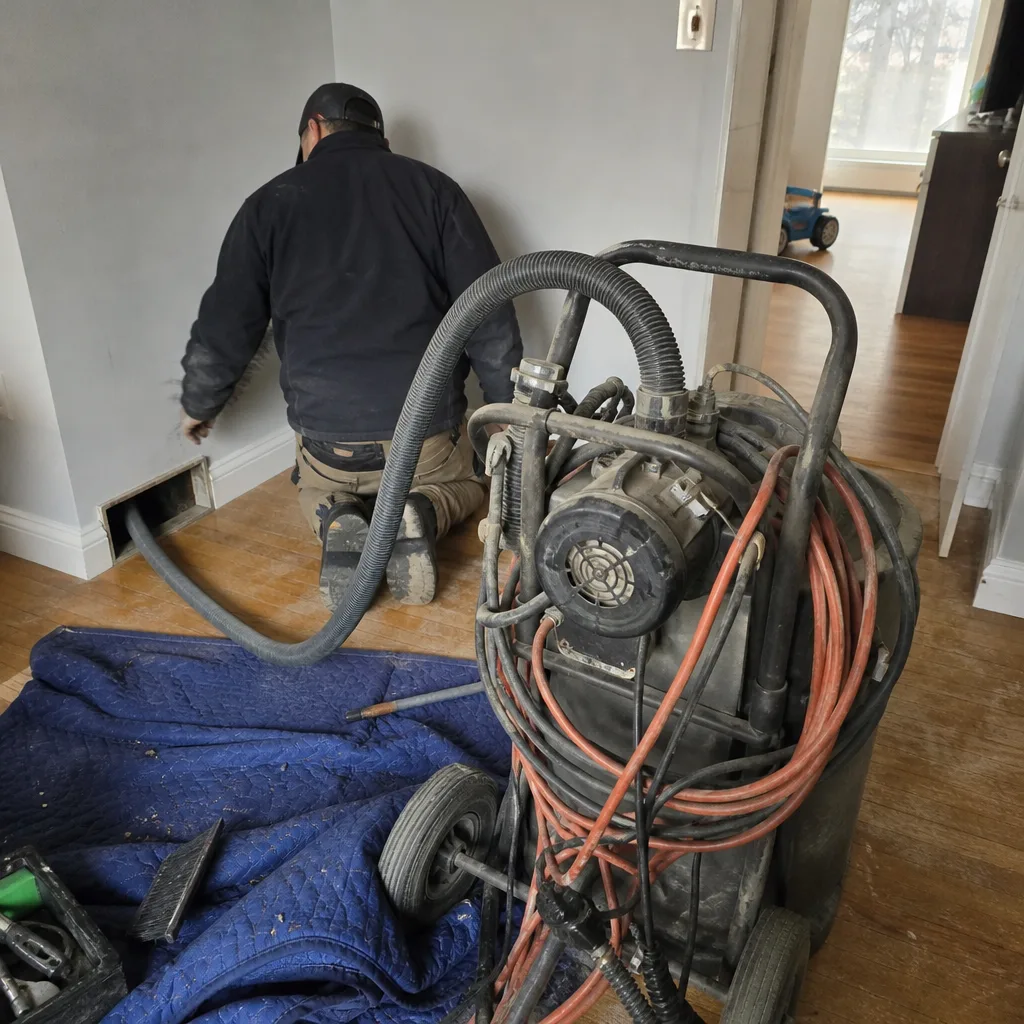 Before
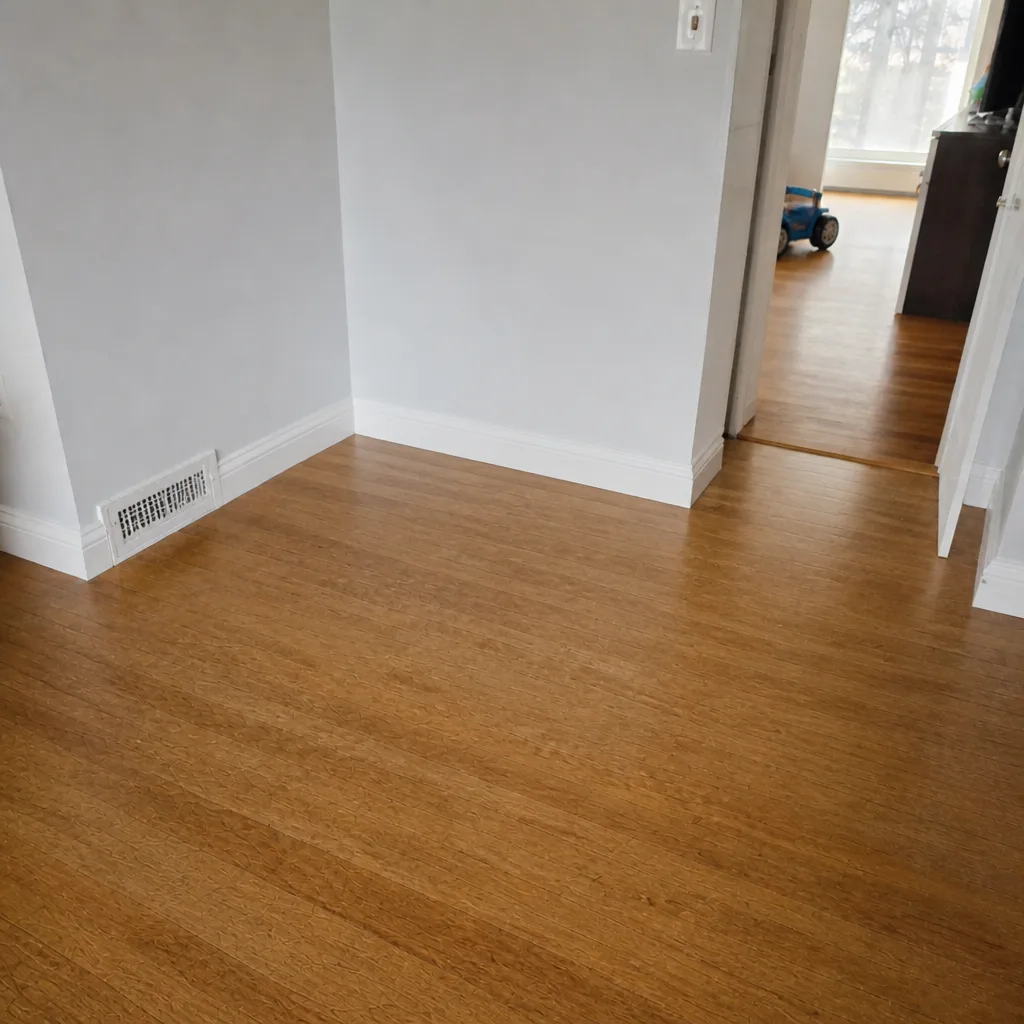 After
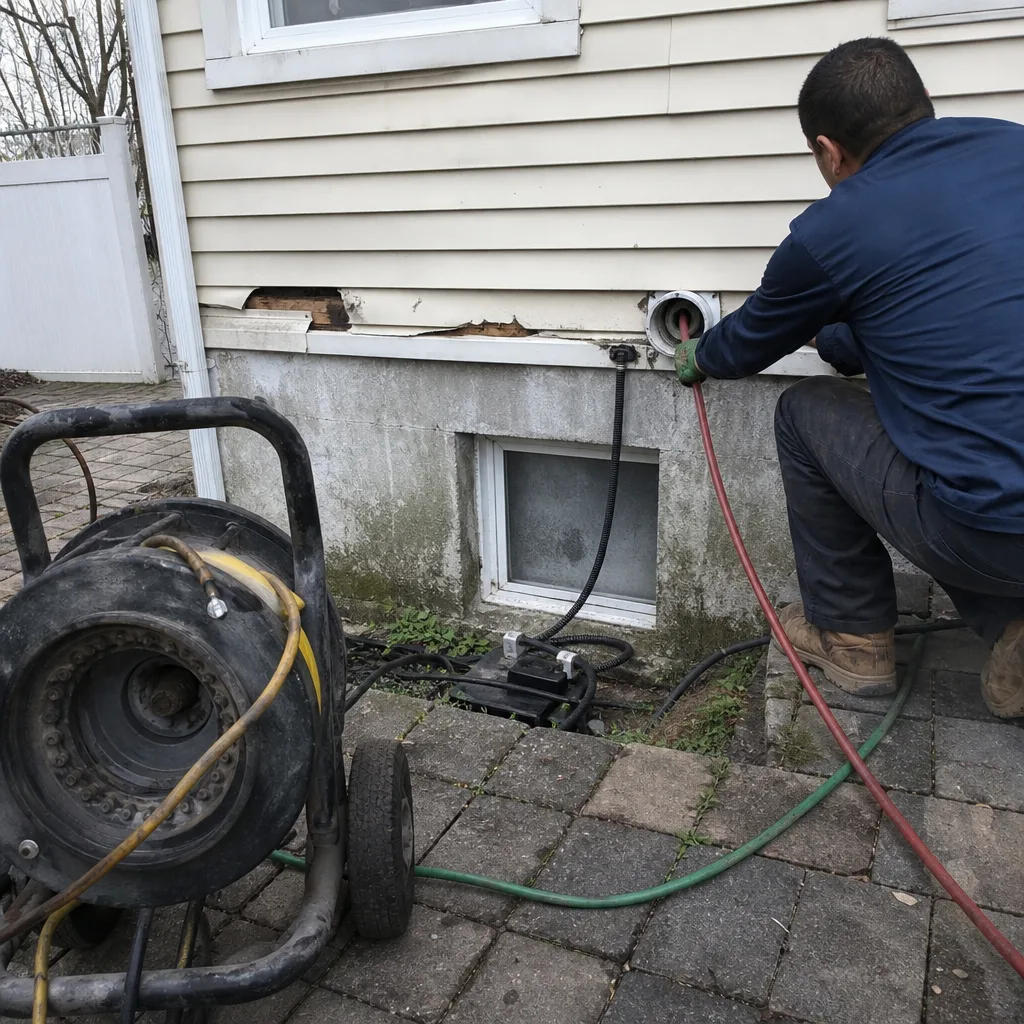 Before
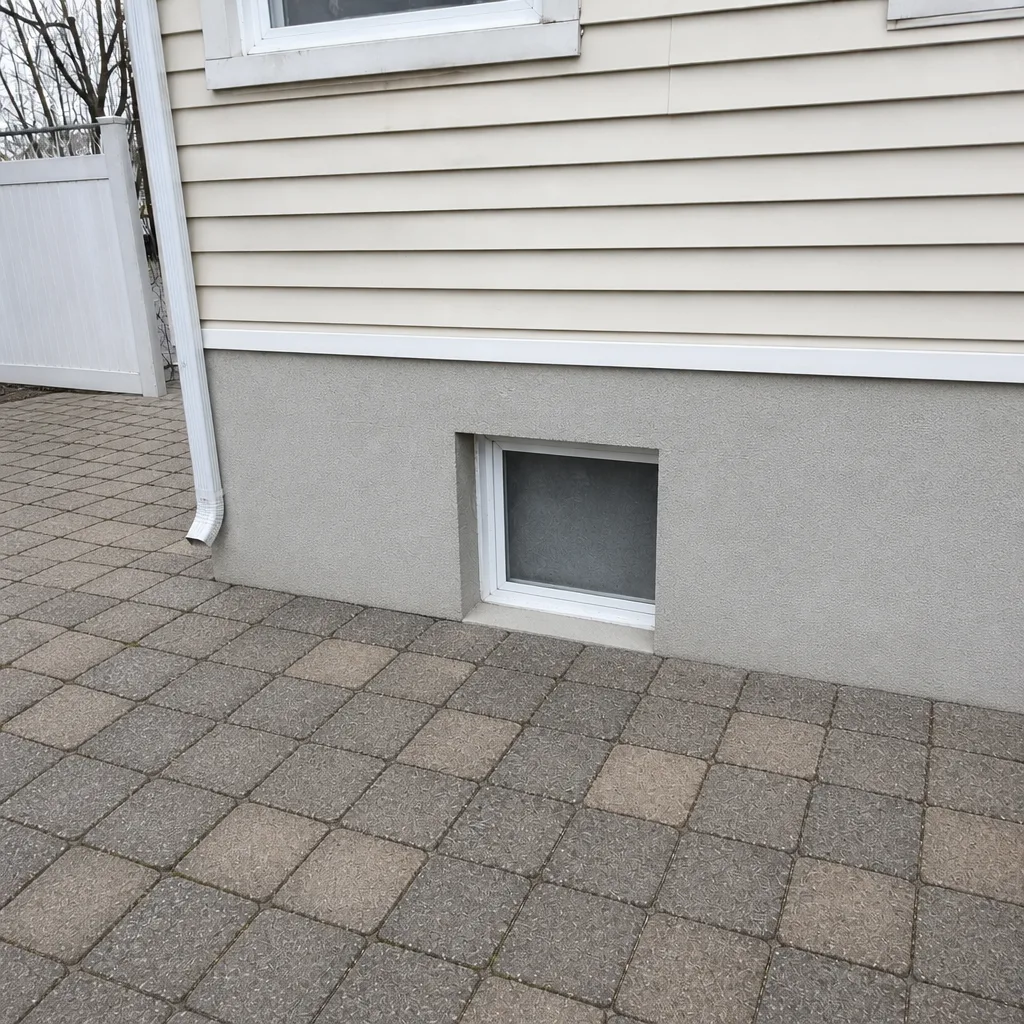 After
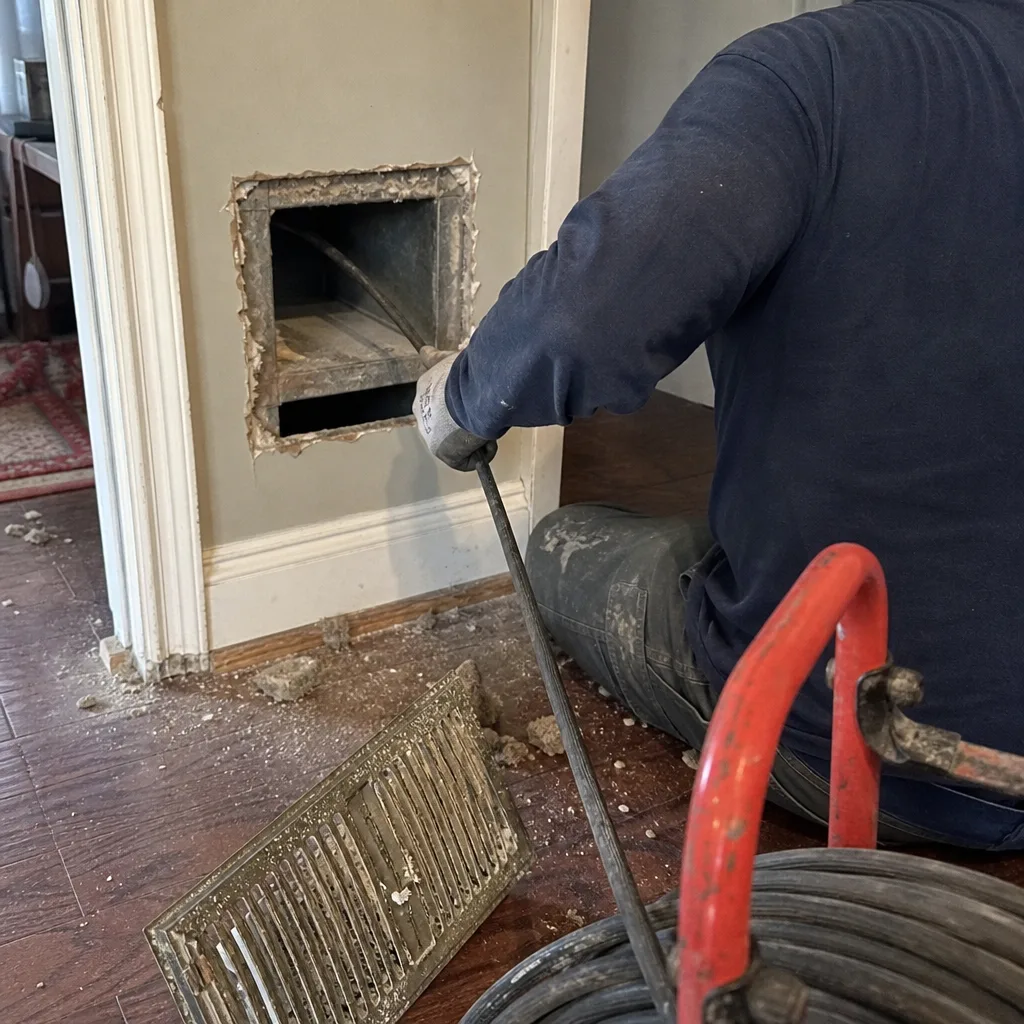 Before
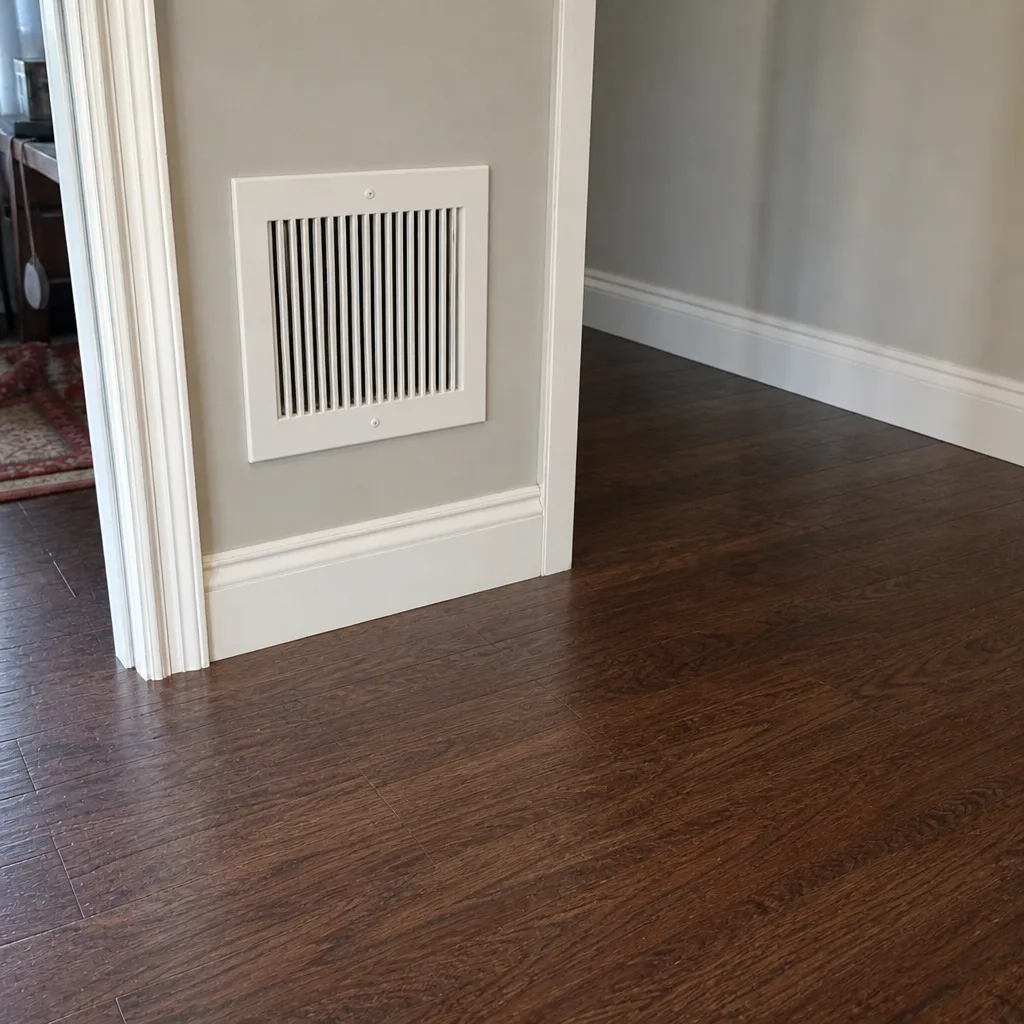 After